

Introduction
In an era where consumers increasingly interact with digital assistants like Siri, Alexa and Google Assistant, voice search has emerged as a game changer for digital marketing. As we look ahead to 2025, voice search optimization is not only a trend but a necessity for businesses seeking to improve online visibility and capture highly qualified traffic. In this comprehensive guide, we’ll explore what voice search optimization is, why it matters for 2025 and practical strategies you can implement right away.
What is Voice Search Optimization?

Voice search optimization is the process of enhancing your website and content so that it performs well when users conduct searches using voice commands. Unlike traditional text-based queries, voice searches tend to be more conversational, longer and often location-based. As a result, optimizing for voice search requires a slightly different approach, one that focuses on natural language and contextual queries.
Key aspects include:
–Natural Language Queries: Voice searches often resemble questions or full sentences rather than fragmented keywords.
–Local Intent: A significant percentage of voice searches are local, making it crucial for businesses with a physical presence to optimize for local SEO.
–Conversational Tone: The content must address the likely phrasing and tone of a spoken query.
Why Voice Search Optimization Matters in 2025
The digital landscape is evolving rapidly and voice search is at the forefront of that transformation. Here are some compelling reasons why optimizing for voice search is essential:
1. Growing Adoption of Smart Assistants:
With over a billion devices using digital assistants worldwide, the shift toward voice-based interactions is undeniable. Consumers increasingly rely on voice searches to get answers quickly and conveniently.
2. Changing User Behavior:
Studies and industry reports (as seen in recent trend analyses by platforms like TikTok and The Times) suggest that the way people search is becoming more conversational. This change means that websites optimized for voice search are more likely to capture this traffic.
3. Local Search Dominance:
Voice searches are highly localized. When a user asks, “Where can I find the best coffee shop near me?” a website that’s properly optimized for local voice search will have a competitive edge.
4. Improved Conversion Rates:
Since voice searches are usually performed by users with specific intent, ranking well for these queries can lead to higher conversion rates compared to traditional keyword searches.
Key Strategies for Voice Search Optimization
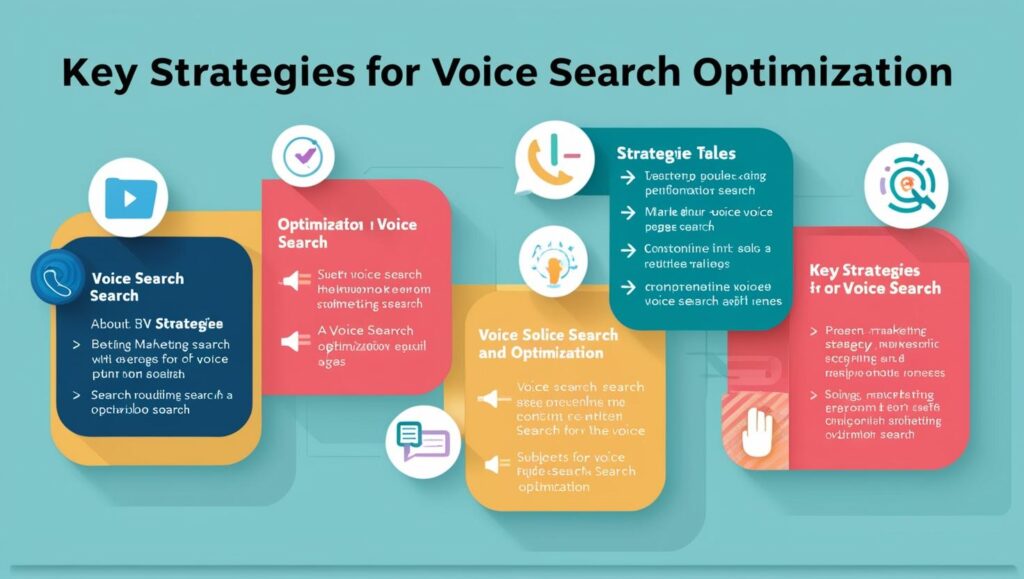
Implementing an effective voice search strategy involves several important steps. Below, we detail actionable strategies that you can begin using today:
1. Optimize for Conversational Keywords
Since voice searches are conversational, your keyword strategy should reflect natural language patterns. Use long-tail keywords and phrases that mimic how people speak. For example, instead of targeting “voice search optimization,” consider phrases such as “how do I optimize my website for voice search 2025?” or “what are the best voice search SEO tips?”
Action Step:
-Review your existing content and identify opportunities to include question-based phrases.
-Use tools like Google Trends and keyword planners to refine and test conversational queries.
2. Focus on Local SEO
A significant number of voice searches have local intent. Ensure that your business listings, local citations and Google My Business profile are fully optimized.
Action Step:
-Verify and update your business information across all local directories.
-Include location-specific keywords in your content (e.g., “best coffee shop in [City Name]”).
3. Create FAQ and Conversational Content
Developing a robust FAQ section or blog posts written in a Q&A format can greatly improve your chances of ranking for voice search queries. Address common questions your customers ask and provide clear, concise answers.
Action Step:
-Identify common customer queries using tools like AnswerThePublic.
-Develop FAQ pages and blog posts that answer these queries in a natural, conversational tone.
4. Improve Site Speed and Mobile-Friendliness
Voice searches are predominantly performed on mobile devices. A fast-loading, mobile-friendly website is crucial not only for user experience but also for higher rankings in search results.
Action Step:
-Use tools like Google’s Mobile-Friendly Test and PageSpeed Insights to optimize your website’s performance.
-Implement responsive design and reduce unnecessary page elements that slow down load times.
5. Utilize Structured Data Markup
Structured data (schema markup) helps search engines understand the context of your content better. This can increase your chances of appearing in rich snippets, which are especially valuable for voice search.
Action Step:
-Add FAQPage and LocalBusiness schema markup to relevant pages.
-Regularly audit your site’s structured data using tools like Google’s Structured Data Testing Tool.
Best Practices and Tools for Voice Search Optimization
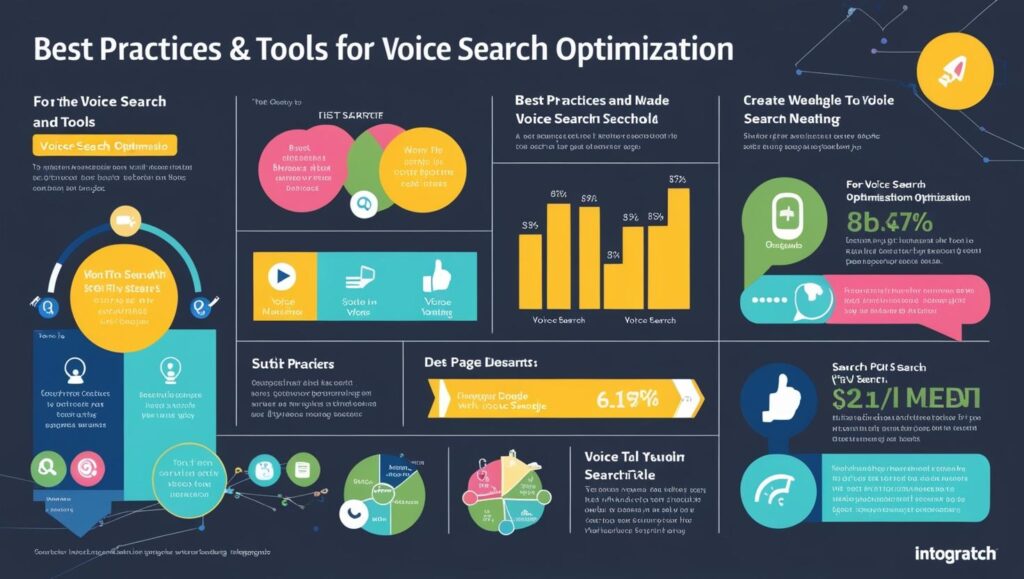
To succeed in voice search optimization, you must integrate several best practices and leverage the right tools:
–Content Optimization:
Ensure that your content is clear, engaging and written in natural language. Use bullet points, subheadings and concise paragraphs to enhance readability.
–Mobile Optimization:
Focus on responsive design and fast-loading pages. Mobile-first indexing means that Google prioritizes your mobile version when ranking your site.
–Structured Data:
Implement structured data to help search engines understand your content. Use JSON-LD format for ease of integration and regular updates.
–Voice-Activated Tools:
Experiment with voice search testing tools such as AnswerThePublic and use voice query simulators to see how your site performs with natural language queries.
–Analytics and Monitoring:
Use Google Analytics, Google Search Console and specialized SEO tools like SEMrush to track performance improvements and adjust your strategy as needed.
How to Measure the Success of Your Voice Search Optimization
Measuring the effectiveness of your voice search strategy is essential for continuous improvement. Consider the following metrics:
–Organic Traffic:
Monitor changes in your organic traffic, especially for long-tail, conversational queries.
–Click-Through Rates (CTR):
Analyze the CTR of pages optimized for voice search. A higher CTR indicates that your snippet and meta description are effectively capturing attention.
–Local Search Rankings:
Track your position for local queries on both desktop and mobile.
–Engagement Metrics:
Look at bounce rates, time on page and pages per session to gauge if users find your content engaging and useful.
–Conversion Rates:
Ultimately, improved rankings and traffic should lead to higher conversion rates. Monitor your conversion funnels to identify any improvements or areas for further optimization.
The Future of Voice Search Optimization
As artificial intelligence and natural language processing continue to advance, voice search is set to become even more integral to digital marketing strategies. In 2025, expect:
–Greater emphasis on conversational content and semantic search: Marketers will need to continuously update content to reflect evolving speech patterns.
–Integration with emerging technologies: Wearables, smart home devices and IoT will further drive the need for fast, accurate voice search optimization.
–Enhanced personalization: AI will enable more precise targeting based on user behavior, location and search history, making voice search results even more tailored to individual needs.
Conclusion
Voice search optimization is poised to play a pivotal role in digital marketing in 2025. By understanding the nuances of conversational queries, focusing on local SEO and utilizing structured data, businesses can secure a competitive edge in the increasingly voice-driven search landscape. The strategies and best practices outlined in this guide provide a roadmap to adapt to this evolving trend and capitalize on the significant opportunities that voice search presents.
Now is the time to review your digital strategy, adjust your content and make sure your website is fully optimized for voice search. Embrace these strategies and get ready to capture the voice-driven traffic that will define the future of digital marketing.
At Balistro, we specialize in helping businesses grow through effective digital marketing strategies. From Google Ads to Meta Ads, we deliver data-driven campaigns that maximize your ROI and drive real results. If you’re looking to boost your online presence, generate leads, or scale your e-commerce business, our expert team is here to help. Contact us today to learn more about how we can support your advertising needs!
Ready to Grow Your Business?
Book a free 30-minute strategy call with Balistro. We’ll audit your marketing and show you exactly where your biggest growth opportunities are.
Why Strategic Digital Marketing Is Essential for Business Growth in India
India’s digital advertising market is projected to reach ₹62,000 crore by 2026, growing at 25% CAGR (Source: Dentsu Digital Report). This explosive growth means more businesses are competing for digital attention than ever before. Without a strategic digital marketing approach, brands risk being invisible to their target audience.
The most successful brands in India’s digital landscape don’t rely on a single channel — they build integrated marketing ecosystems. Brands using 3+ digital channels see 287% higher purchase rates than single-channel campaigns (Source: Omnisend). This multi-channel approach, when executed strategically, creates multiple touchpoints throughout the customer journey.
For D2C and B2B brands specifically, digital marketing has become the primary growth driver. With 78% of Indian businesses increasing their digital marketing budgets in 2025, the competitive landscape demands not just presence but excellence across search, social, email, and content channels.
Building an Integrated Digital Marketing Strategy
- Customer Research & Persona Development: Start with deep customer research — analyze your existing customer data, conduct surveys, review search queries, and study competitor audiences. Build detailed buyer personas including demographics, pain points, digital behavior, and preferred content formats.
- Channel Strategy & Prioritization: Not every channel is right for every business. D2C brands should prioritize Meta Ads, Google Shopping, email marketing, and SEO. B2B brands focus on Google Search, LinkedIn, content marketing, and email nurturing. Start with 2-3 core channels and expand based on data.
- Content Strategy & Calendar: Develop a content strategy that supports every stage of the funnel — awareness (blog posts, social content), consideration (case studies, comparison guides), and decision (product pages, testimonials). Create a monthly content calendar with themes aligned to business goals and seasonal opportunities.
- Paid Media Strategy: Structure paid campaigns by funnel stage with appropriate budgets. Allocate 40% to prospecting (awareness), 30% to remarketing (consideration), and 30% to conversion campaigns. Use cross-channel remarketing to nurture prospects across platforms.
- Measurement & Optimization: Implement comprehensive tracking across all channels. Build a unified dashboard that shows the complete customer journey. Use data to continuously optimize — shift budget to top-performing channels, refine targeting, and improve creative based on performance insights.
Digital Marketing Mistakes That Stunt Business Growth
- No clear strategy or goals: Running ads and posting content without a coherent strategy wastes budget and effort. Define specific, measurable goals for each channel — traffic, leads, revenue — and build campaigns that directly support those objectives.
- Channel silos: Running each marketing channel independently creates disconnected customer experiences and misses cross-channel optimization opportunities. Integrate your channels so email supports paid media, content supports SEO, and social supports brand building in a cohesive ecosystem.
- Chasing trends over fundamentals: New platforms and tactics are exciting, but sustainable growth comes from mastering fundamentals — compelling messaging, strong offers, excellent landing pages, and data-driven optimization. Build a strong foundation before experimenting with emerging channels.
- Underinvesting in retention: Most brands overspend on acquisition and underinvest in retention. Retaining existing customers costs 5-7x less than acquiring new ones. Build email automation, loyalty programs, and post-purchase experiences that maximize customer lifetime value.
- Not investing in brand: Performance marketing drives immediate results, but brand building creates long-term competitive advantage. Strong brands enjoy higher conversion rates, lower acquisition costs, and greater pricing power. Allocate at least 20-30% of marketing budget to brand-building activities.
Frequently Asked Questions
How much should a small business spend on digital marketing in India?
Small businesses in India should allocate 7-15% of revenue to digital marketing, with a minimum of ₹25,000-50,000 per month for meaningful impact. Start with the channels most likely to drive immediate revenue — Google Ads for intent-based traffic and social media ads for awareness — then expand as you see returns.
What is the most effective digital marketing channel for B2B?
For B2B companies in India, Google Search Ads and LinkedIn are typically the most effective channels for lead generation. Content marketing and SEO build long-term authority and organic lead flow. Email marketing nurtures leads through longer B2B sales cycles. The optimal mix depends on your industry, target audience, and sales process.
How do I measure digital marketing success?
Measure success against your business objectives: revenue growth, customer acquisition cost (CAC), return on ad spend (ROAS), organic traffic growth, conversion rates, and customer lifetime value (CLV). Avoid vanity metrics like impressions or followers unless they directly correlate with business outcomes. Set up proper attribution to understand which channels drive real results.
Ready to Grow Your Business?
At Balistro Consultancy, we help D2C and B2B brands achieve measurable marketing results through data-driven strategies. Whether you need Google Ads management, Facebook advertising, SEO services, or email marketing, our team of certified specialists is ready to help you grow.
Book a free consultation call to discuss your marketing goals and discover how Balistro can drive real results for your brand.