AEO vs SEO vs GEO: The 2026 Answer-Engine Playbook for D2C Brands
TL;DR
AEO vs SEO vs GEO explained for 2026: how D2C brands win answer engines, AI Overviews, and ChatGPT discovery. A practical playbook from Balistro.

If you run a D2C brand in 2026, the search box you spent a decade optimising for is no longer where most decisions get made. Google's AI Overviews now sit on top of roughly half of all queries (Google confirmed AI Overviews reach over a billion users monthly, and third-party trackers like Ahrefs and BrightEdge put coverage in the high-40s percent for commercial and informational terms). Meanwhile a growing slice of your buyers open ChatGPT, Perplexity, or Gemini before they ever touch a blue link. The acronyms have multiplied to match: SEO, AEO, and GEO. Most founders I talk to use them interchangeably, and that confusion is quietly costing them visibility.
Here is the one-sentence answer worth bookmarking: SEO earns rankings in traditional search results, AEO earns the cited answer inside answer engines and PAA-style boxes, and GEO earns the mention inside generative AI responses from tools like ChatGPT and Perplexity. They overlap, but they are not the same job, and treating them as one is why so many D2C sites still rank yet get fewer clicks every quarter. Below is how we actually run all three at Balistro.
The 30-second definitions every D2C founder should internalise
The three disciplines share a foundation - good content, clean technical hygiene, credible authority - but they optimise for different surfaces, and each surface rewards a different format.
- SEO (Search Engine Optimisation): ranking your pages in the classic ten blue links. Still the backbone, still drives the bulk of high-intent traffic for most stores, but increasingly the entry point rather than the destination.
- AEO (Answer Engine Optimisation): getting your content selected as the direct answer - featured snippets, People Also Ask, AI Overviews, voice results. AEO is about being the concise, structured, factual source a machine can lift and quote.
- GEO (Generative Engine Optimisation): getting your brand named or recommended inside generative AI answers (ChatGPT, Perplexity, Gemini, Claude). GEO rewards entity recognition, third-party mentions, and being part of the corpus these models trust.
AEO vs SEO vs GEO: the comparison at a glance
| Dimension | SEO | AEO | GEO |
|---|---|---|---|
| Primary surface | Blue-link SERP | Snippets, PAA, AI Overviews, voice | ChatGPT, Perplexity, Gemini answers |
| What wins | Rankings and clicks | The cited, lifted answer | Brand mention or recommendation |
| Key lever | Topical authority, links, technical health | Structured data, concise direct answers, schema | Entity authority, citations across the web |
| How you measure it | Rankings, organic sessions | Snippet/PAA capture, AI Overview presence | Share of AI answers, prompt-level visibility |
| Time to impact | Slow (months) | Medium (weeks once indexed) | Slow and indirect (corpus-dependent) |
Why this split matters more in 2026 than it did in 2024
Two things changed the math. First, zero-click behaviour accelerated: when an AI Overview answers the question on the page, the user often never clicks through. Your ranking can be intact while your traffic quietly erodes. That is the SEO-only trap. Second, discovery fragmented. A meaningful and growing share of your category research now happens inside an LLM that may never surface your URL at all - it just summarises what it knows about your category and names a few brands. If you are not one of those named brands, you are invisible at the exact moment of consideration.
For D2C specifically, this collides with a harder paid-media reality. Meta signal loss after iOS privacy changes and the cookie deprecation drift have pushed CPMs up and made attribution murkier; Google's AI Max and agentic ad formats and Meta's Andromeda ranking system are absorbing more control into the algorithm. When paid acquisition gets more expensive and less transparent, owned and earned visibility across SEO, AEO, and GEO stops being a "nice to have" and becomes your margin protection.
How to do SEO that still earns clicks
SEO is not dead - it is the necessary base layer for the other two. But the SEO that works in 2026 is built for the queries AI cannot fully answer on its own: deep comparisons, hands-on reviews, original data, and transactional intent where the user genuinely needs to land on a product page.
Practical priorities
- Build genuine topical authority around your category, not scattered keyword pages. One well-structured hub beats fifty thin posts.
- Front-load original value AI cannot replicate: proprietary data, real customer results, founder POV, India-specific pricing and logistics context.
- Keep technical health boring and clean - fast pages, crawlable structure, sane internal linking. Core Web Vitals still gate everything downstream.
How to do AEO so machines quote you
AEO is the most mechanical of the three, which makes it the fastest win for most D2C brands. The principle: structure your content so a machine can extract a clean, confident answer.
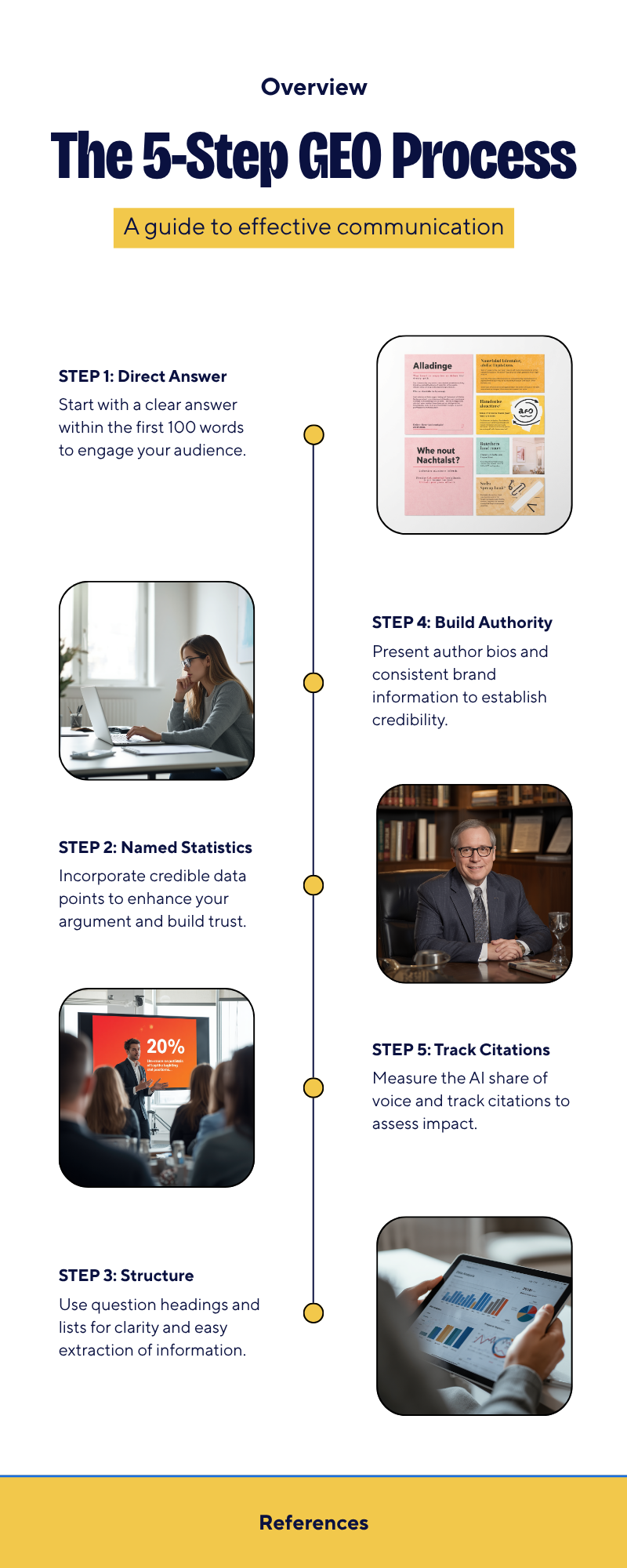
- Answer the question in the first 40-60 words of a section, then expand. This is exactly the format that powers featured snippets and AI Overviews.
- Use real question-format H2s and H3s that mirror how people actually search and speak.
- Implement schema seriously - FAQPage, Product, Organization, and Review markup give answer engines the structured signals they prefer.
- Keep facts crisp and self-contained so they survive being lifted out of context.
This is also why every Balistro content brief now ships with an FAQ block and quick-answer paragraphs by default - it is the cheapest AEO insurance you can buy. We package SEO, AEO, and GEO together because the same content asset, structured correctly, can compete on all three surfaces at once - it is the core of how we run our SEO, AEO and GEO programmes for D2C and B2B clients.
How to do GEO so AI recommends your brand
GEO is the newest and least controllable, but ignoring it is a mistake. Generative models recommend brands they "know" - and that knowledge is assembled from how often and how credibly your brand appears across the web. You cannot prompt-engineer your way into ChatGPT's recommendations; you earn it.
What actually moves GEO
- Entity clarity: a consistent, well-described brand identity across your site, Wikipedia-adjacent sources, directories, and structured data so models map you to your category correctly.
- Third-party mentions: reviews, comparison articles, listicles, Reddit and forum presence, and press. LLMs lean heavily on these aggregations when forming category recommendations.
- Being cited, not just present: Perplexity and Google's AI mode show sources - earning those citations through genuinely useful, quotable content compounds over time.
For an Indian D2C brand spending, say, ₹15-30 lakh a month on paid media, even a small GEO presence - being one of three skincare or coffee brands an LLM names for "best clean-label options" - can shift acquisition economics meaningfully, because that mention reaches buyers at zero marginal cost.
The Balistro stack: how we sequence all three
You do not pick one. You sequence them. Our default rollout for a D2C client looks like this:
- Fix the SEO base - technical health, topical hubs, the transactional and comparison pages that still drive revenue clicks.
- Layer AEO into every asset - quick answers, question headers, schema. This is bolted onto SEO work, not done separately.
- Build GEO authority in parallel - entity consistency, earned mentions, citation-worthy content, and active monitoring of how the major LLMs describe your category.
- Tie it back to retention - because in a high-CPM world, the brands that win are the ones turning this earned visibility into repeat LTV, not just one-time orders.
FAQ
Is AEO replacing SEO?
No. AEO extends SEO rather than replacing it. You still need strong rankings and crawlable, authoritative pages for AEO to work - answer engines pull from content that already ranks and is well-structured. Think of AEO as a formatting and schema layer applied on top of solid SEO foundations, not a separate channel you can run instead of SEO.
What is the difference between AEO and GEO?
AEO targets answer surfaces inside search - featured snippets, People Also Ask, AI Overviews, and voice - by structuring content a machine can lift directly. GEO targets generative AI tools like ChatGPT and Perplexity, where the goal is having your brand named or recommended. AEO is about being the quoted answer; GEO is about being the trusted brand the model surfaces.
Does GEO matter for a small D2C brand in India?
Yes, increasingly. Indian buyers researching categories like skincare, supplements, or home goods now ask LLMs for recommendations before visiting any site. If a model never names your brand, you lose that consideration moment entirely - at zero cost to competitors who earned the mention. Even modest GEO presence compounds, especially as paid CPMs keep climbing.
How do I measure AEO and GEO success?
For AEO, track featured-snippet and PAA capture, plus how often you appear in AI Overviews for target queries using rank trackers that now report these. For GEO, run structured prompts across ChatGPT, Perplexity, and Gemini regularly and log whether your brand is mentioned, cited, or recommended - then watch that share-of-answer trend over time.
Where to start, and how Balistro can help
If you take one thing from this: SEO, AEO, and GEO are three jobs sharing one engine. Run them as a single integrated programme and the same content earns rankings, answers, and AI recommendations simultaneously. Run them in silos - or ignore the answer-engine layer entirely - and you will keep watching rankings hold while traffic and consideration quietly leak away.
At Balistro we have managed over $1M a month in ad spend across 100+ brands, and what we see consistently is that the D2C winners in 2026 pair efficient paid acquisition with compounding answer-engine visibility. If you want a clear-eyed audit of where you stand across all three, talk to Balistro and we will map a sequenced plan for your brand. - Naman Khetawat, Balistro