
The Agency Scaling Problem
Most digital marketing agency growth follows a painful pattern: win more clients, hire more people, watch margins compress, hire more people to maintain quality, watch margins compress further. At some point, headcount and complexity grow faster than revenue, and the agency that looked like a success story becomes a low-margin service business trapped in a perpetual hiring cycle.
The agencies breaking this pattern in 2026 are doing it through automation and AI. They are growing client revenue and account count without proportional headcount growth, by building systems that do at scale what humans previously had to do manually.
At Balistro Consultancy, we have not just studied this model — we have built it. We also build custom tools specifically for agencies looking to scale this way. Here is exactly how automation and AI enable agency growth without the traditional cost curve.
Automated Reporting: Reclaim 30-40% of Account Manager Time
Ask any account manager at a digital agency how much of their time goes to pulling reports and you will hear a number between 25% and 40%. Data from Meta Ads Manager, Google Ads, GA4, email platforms, and SEO tools all need to be pulled, formatted, combined, and presented to clients — typically weekly or monthly, across dozens of accounts.
Automated reporting eliminates this entirely:
- API integrations pull performance data from all platforms automatically on a set schedule
- Custom dashboards present the data in client-friendly formats without manual compilation
- AI-generated narrative summaries explain performance trends and key insights in plain language
- Automated email delivery sends reports to clients and internal stakeholders on schedule
Agencies that automate reporting give account managers back 15-20 hours per month per client, which can be reinvested into strategic thinking, creative development, and new business — or used to manage more accounts per person.
AI-Assisted Strategy: Better Recommendations in Less Time
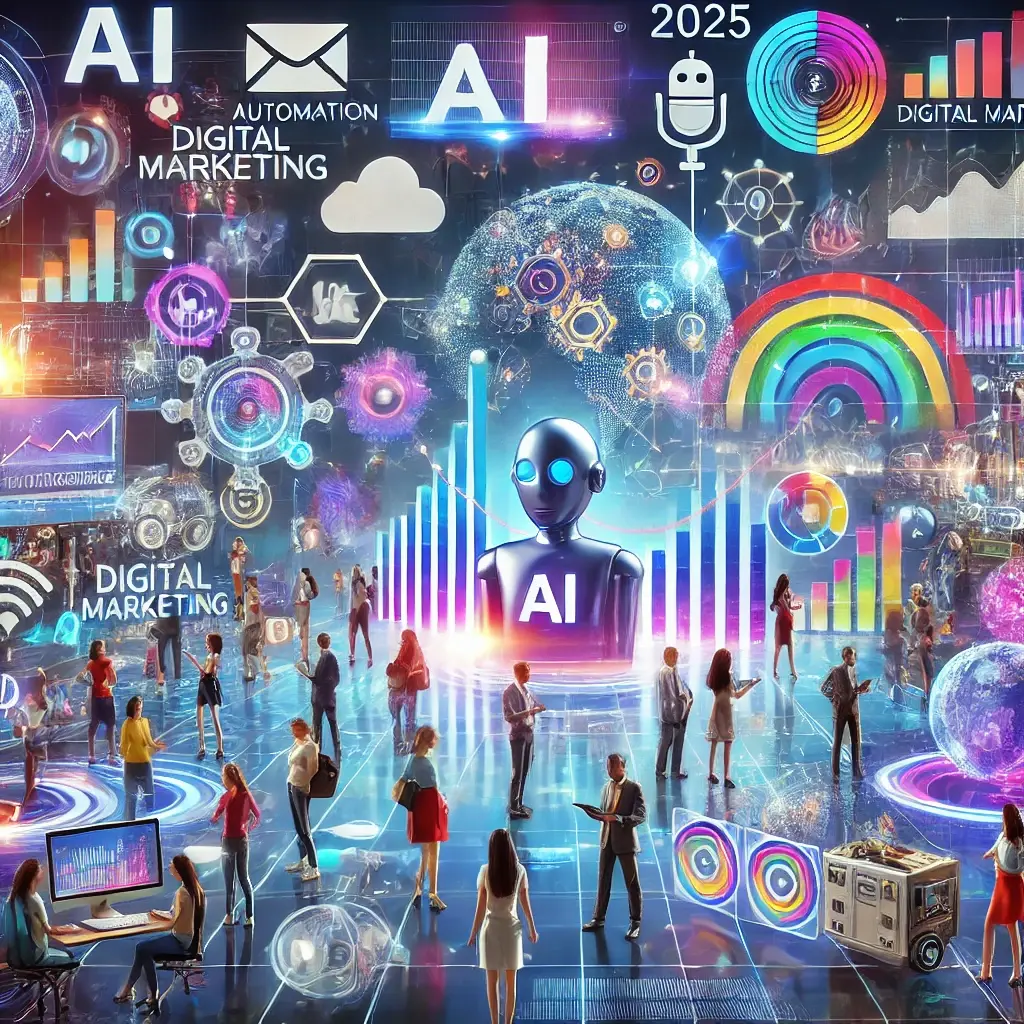
Strategic thinking used to require hours of data analysis before a single recommendation could be made. AI tools have fundamentally changed this:
- Performance analysis: AI can scan campaign data across dozens of accounts simultaneously, identifying patterns and anomalies that would take hours for a human analyst to find
- Competitive intelligence: AI tools monitor competitor ad activity, keyword rankings, and content strategies across your clients’ competitive landscapes continuously
- Creative ideation: AI accelerates creative briefing, headline generation, and concept development — freeing strategists to focus on evaluation and refinement rather than generation
- Campaign optimisation recommendations: AI-powered tools generate bid adjustment recommendations, audience segment suggestions, and creative refresh triggers based on performance data
Custom Client Dashboards: The Client Retention Weapon
Client retention is the foundation of agency profitability. Agencies that can demonstrate clear, consistent, and transparent value through excellent reporting and dashboards retain clients significantly longer than those that cannot.
Custom client dashboards serve multiple purposes:
- 24/7 client access to live performance data reduces inbound reporting queries
- Unified cross-channel view (paid ads, organic, email, SEO) in a single dashboard demonstrates the agency’s holistic value
- Branded dashboards with agency and client co-branding reinforce the agency relationship
- Custom metric selection shows clients the KPIs that matter to their specific business goals rather than generic platform metrics
Balistro builds custom client dashboards for agencies as part of our custom tool development service. These dashboards pull data from all relevant platforms via API and present it in a format designed specifically for the agency’s client base and reporting needs.
White-Label Tools: New Revenue Streams and Client Stickiness
The most sophisticated scaling agencies are building proprietary tools that they offer to clients as part of their service. These white-label tools create multiple advantages:
- Clients become dependent on the tool, increasing switching costs and improving retention
- The tool can be offered as a standalone SaaS product to other agencies or businesses, creating a new revenue stream
- Proprietary tools differentiate the agency from competitors in new business pitches
- Tool data creates a proprietary intelligence advantage that improves strategy quality across all client accounts
Examples of white-label agency tools include custom attribution platforms, creative performance trackers, automated competitor monitoring dashboards, and AI-powered ad copy generators trained on the agency’s best-performing historical copy.
Automating Client Onboarding and Account Setup
New client onboarding is one of the most time-intensive processes in agency operations. Automation can dramatically compress the timeline:

- Standardised onboarding questionnaires that automatically populate project briefs and account setup checklists
- Automated access requests for ad accounts, analytics, CRM, and website platforms
- Template-based campaign structures that can be customised and deployed in hours rather than days
- Automated baseline reporting setup that is configured as part of onboarding rather than bespoke per client
The Tech Stack for a Scalable Agency
Building a scalable automation-first agency requires the right technology foundation:
- Project management: Asana, Monday.com, or ClickUp with automated task creation and status updates
- Reporting: Looker Studio (Google Data Studio) connected to all platform APIs for automated report generation
- CRM and sales: HubSpot for pipeline management, automated follow-up, and client communication logging
- Communication: Slack with automated notifications from reporting and analytics systems
- Custom development: Python or JavaScript custom scripts for bespoke automation needs — connecting APIs that do not have native integrations
How Balistro Helps Agencies Scale
Balistro is uniquely positioned to help agencies scale because we operate as both a performance marketing agency and a custom tools builder. We build automation systems, reporting infrastructure, and custom tools specifically for agencies that want to grow without proportional headcount growth.
Our custom tools development service has helped agencies reduce account management time per client by 35-45%, improve client retention rates, and create proprietary capabilities that win new business.
We also apply the same automation-first approach to our own client work — managing more accounts with higher performance standards by systemising everything that can be systemised and focusing human expertise on what machines cannot yet do. Learn more about our digital marketing services and how we build systems that scale.
Ready to Build an Agency That Scales Without Burning Out?
If you are an agency owner stuck in the headcount-growth trap, automation and AI offer a genuine way out. Balistro can help you design and build the systems that let you grow revenue without growing complexity.
Book a strategy call with the Balistro team and let us show you what an automation-first agency operating model looks like for your specific business.
Why AI and Marketing Automation Are Reshaping the Industry
Artificial intelligence and marketing automation have moved from experimental technology to essential business infrastructure. In 2026, brands using AI-powered marketing tools report 30-50% improvements in campaign efficiency, while marketing automation drives 14.5% increase in sales productivity and 12.2% reduction in marketing overhead (Source: Nucleus Research).

For Indian businesses competing in an increasingly digital marketplace, AI adoption is no longer optional — it’s a competitive necessity. From AI-powered bidding algorithms in Google and Meta Ads to automated email workflows and predictive analytics, the brands that leverage these technologies effectively are outpacing those that rely solely on manual processes.
The evolution of large language models like Claude and GPT has opened entirely new possibilities for content creation, customer service automation, and data analysis. Marketing teams that integrate these tools into their workflows are producing more content, responding faster to market changes, and making better data-driven decisions — all with leaner teams.
Implementing AI and Automation in Your Marketing Stack
- Audit Your Current Workflow: Identify repetitive, time-consuming tasks that could benefit from automation — report generation, bid management, email scheduling, social media posting, and basic customer inquiries. Prioritize tasks with the highest time-savings and lowest implementation risk.
- Start with Platform-Native AI: Before investing in third-party tools, leverage AI features built into your existing platforms — Google’s Smart Bidding, Meta’s Advantage+ campaigns, Klaviyo’s predictive analytics, and HubSpot’s AI content assistant. These require no additional investment and provide immediate value.
- Build Automated Workflows: Set up marketing automation workflows for common scenarios: lead nurturing sequences, abandoned cart recovery, post-purchase follow-ups, review requests, and re-engagement campaigns. Map out the full customer journey and automate touchpoints that don’t require human judgment.
- Integrate AI Content Tools: Use AI assistants for content creation acceleration — generating first drafts, brainstorming headlines, creating ad copy variations, and repurposing content across formats. Always review and refine AI-generated content for accuracy, brand voice, and uniqueness.
- Set Up Custom Automations: For more advanced needs, build custom automation tools that connect your marketing platforms. Use APIs to sync data between your CRM, ad platforms, and analytics tools. Automate reporting dashboards that update in real-time without manual data pulling.
AI Marketing Mistakes to Avoid
- Automating without strategy: Automation amplifies both good and bad strategies. Before automating any marketing process, ensure the underlying strategy is sound. Automating a poorly designed email sequence just sends bad emails faster.
- Over-relying on AI for content: AI-generated content without human oversight risks brand voice inconsistency, factual errors, and generic messaging. Use AI to accelerate content creation, but always have human editors review for accuracy, quality, and brand alignment.
- Ignoring the human element: Not every customer interaction should be automated. Complex inquiries, complaint resolution, and high-value relationship building require human touch. Use automation for routine tasks and free up your team for high-impact human interactions.
- Not measuring automation ROI: Track the business impact of every automation you implement — time saved, revenue generated, costs reduced. Regularly audit automated workflows to ensure they’re still performing well and haven’t become stale or irrelevant.
- Failing to maintain and update: Marketing automation requires ongoing maintenance. Algorithms change, platforms update, and market conditions shift. Review and optimize automated workflows quarterly to ensure they remain effective and aligned with current best practices.
Frequently Asked Questions
Will AI replace marketing agencies?
AI won’t replace marketing agencies, but agencies that use AI will replace those that don’t. AI handles repetitive tasks like bid optimization, basic content generation, and data analysis faster and at scale. However, strategic thinking, creative direction, brand building, and complex problem-solving still require human expertise. The most effective approach combines AI efficiency with human creativity and judgment.
What AI tools are most useful for digital marketing?
Essential AI marketing tools in 2026 include: Claude and GPT for content creation and analysis, Google’s AI-powered Smart Bidding for ad optimization, Jasper or Copy.ai for ad copywriting, Midjourney for creative assets, and platform-native AI features in Klaviyo, HubSpot, and Salesforce for automation. The best tool depends on your specific needs and existing tech stack.
How do I get started with marketing automation?
Start small with high-impact automations: set up a welcome email series for new subscribers, configure abandoned cart recovery emails, and enable Google Ads Smart Bidding. These three automations alone can significantly improve marketing performance with minimal technical complexity. Expand gradually as you see results and build confidence in the technology.
Ready to Grow Your Business?
At Balistro Consultancy, we help D2C and B2B brands achieve measurable marketing results through data-driven strategies. Whether you need Google Ads management, Facebook advertising, SEO services, or email marketing, our team of certified specialists is ready to help you grow.
Book a free consultation call to discuss your marketing goals and discover how Balistro can drive real results for your brand.