

The Performance Marketing Landscape in 2026
Performance marketing is evolving faster in 2026 than at any point in the past decade. The convergence of artificial intelligence, privacy regulation, first-party data, and shifting consumer behaviour is reshaping how brands acquire customers, measure results, and allocate budgets. Staying ahead of these trends is not just a competitive advantage — for many brands, it is a survival imperative.
This guide covers the most important performance marketing trends shaping 2026 and beyond, with practical implications for how brands should adapt their strategies now.
Trend 1: AI-Powered Campaign Management Becomes the Norm
Artificial intelligence has moved from a feature to the foundation of performance marketing on every major platform. Google’s Performance Max, Meta’s Advantage+, and LinkedIn’s Campaign Automation all use AI to automate audience selection, creative optimisation, and bid management at a scale impossible for human managers alone. In 2026, the role of the performance marketer is shifting from manual optimisation to AI direction — setting the right goals, feeding the right creative inputs, and interpreting the outputs that AI systems generate.
Brands that learn to work effectively with AI campaign management systems — providing better creative assets, cleaner conversion data, and more precise objective settings — will consistently outperform those that fight against automation or refuse to trust AI bidding. Our digital marketing team has built its workflow around AI-assisted campaign management, combining algorithmic efficiency with human strategic oversight.
Trend 2: First-Party Data Becomes the Core Competitive Advantage
The deprecation of third-party cookies, iOS privacy changes, and increasing regulatory scrutiny of data practices (India’s DPDP Act came into effect in 2025) have made first-party data — data you collect directly from your customers with their consent — the most valuable asset in performance marketing. Brands with large, well-segmented first-party databases have a significant targeting advantage over those still relying on third-party data sources.
Building first-party data assets means investing in email list growth through email marketing, loyalty programmes, gated content, and website personalisation. It also means implementing server-side tracking and Conversions APIs to maximise the quality of conversion signals fed to advertising platforms — critical for AI bidding systems to optimise effectively.
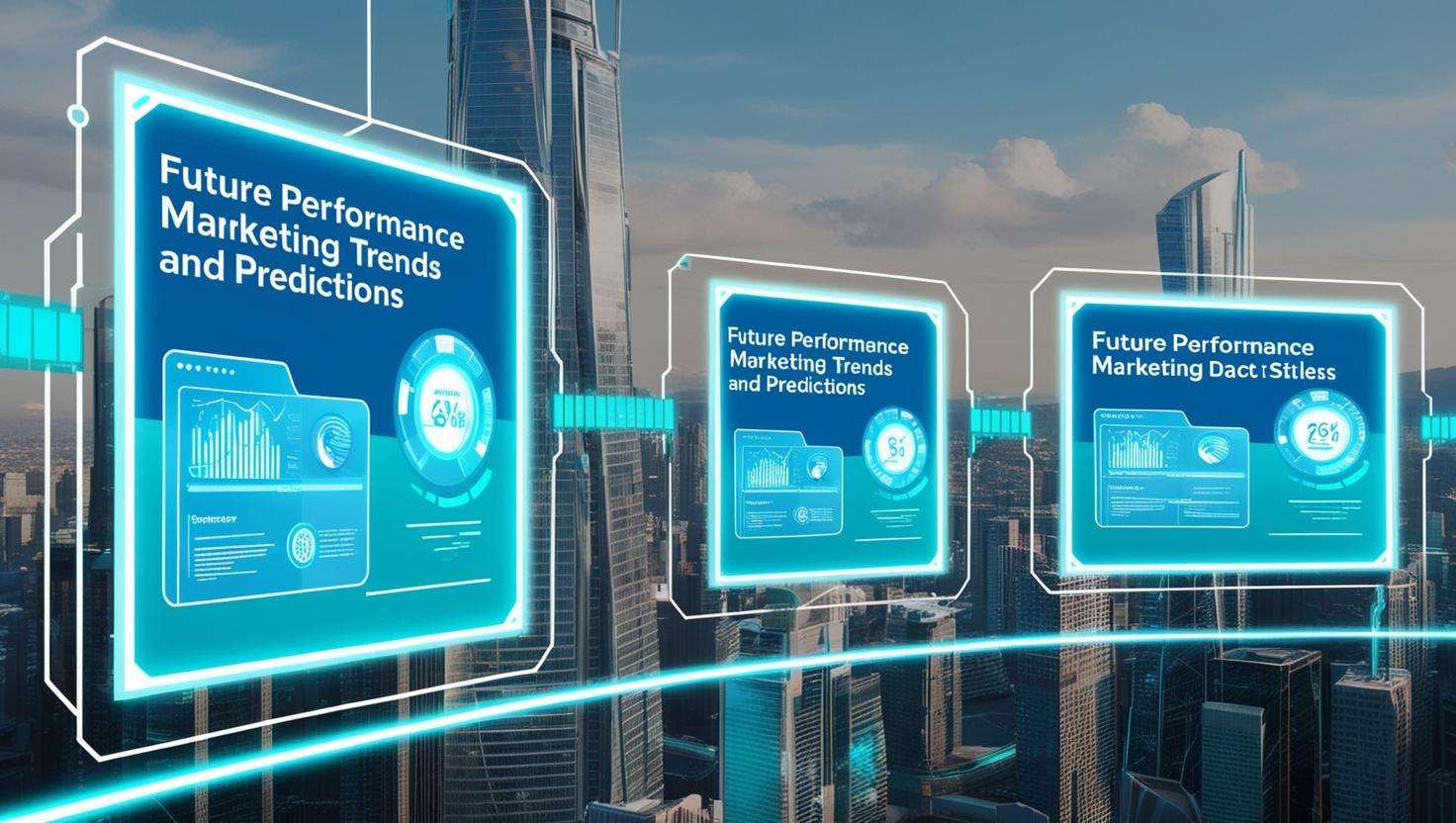
Trend 3: Short-Form Video Dominates Ad Creative
Reels on Instagram and Facebook, Shorts on YouTube, and Stories across platforms have made short-form video the most engaging ad format in 2026. Brands that can consistently produce compelling 15–30 second video creative — natively formatted for each platform, hook-first, and designed for sound-off viewing — will achieve significantly better performance than those relying on static images and long-form video.
The shift to video-first creative is democratising advertising — a well-shot smartphone video from a genuine customer can outperform a polished Rs 5 lakh production in conversion rate. Our creative design team produces both high-production and UGC-style short-form video assets designed to perform in the feed.
Trend 4: Connected TV (CTV) Advertising Enters Performance Marketing
Connected TV — streaming services like Netflix (with ads), Amazon Prime Video, JioCinema, and Hotstar — is emerging as a measurable performance channel for the first time. Improved attribution technology now allows advertisers to track website visits, app installs, and purchases that occur after a CTV ad view. For brands targeting premium, video-first audiences in India, CTV advertising represents a significant opportunity that most competitors have not yet explored.
CTV ad spend in India is projected to grow at 35%+ annually through 2028 as streaming adoption continues rising and ad-supported tiers from premium platforms expand. Brands that establish CTV advertising programmes now will benefit from lower CPMs and less competition before the channel becomes mainstream for performance marketers.
Trend 5: Retail Media Networks as Performance Channels
India’s major e-commerce platforms — Amazon India, Flipkart, Myntra, Nykaa, Meesho — have built sophisticated retail media advertising networks that let brands run performance campaigns directly within the shopping environment. These campaigns capture users at the moment of purchase intent, making them extremely high-converting for brands selling through these platforms.
In 2026, retail media is one of the fastest-growing performance marketing channels globally. For D2C brands that also sell on marketplaces, retail media advertising complements their direct-to-consumer performance marketing efforts, capturing incremental sales from marketplace buyers. Our Google Ads team also helps brands coordinate their Google Shopping and Amazon Advertising strategies to maximise cross-channel revenue.
Trend 6: Measurement and Attribution Gets More Sophisticated
As tracking limitations have made last-click attribution increasingly unreliable, brands are adopting more sophisticated measurement frameworks. Marketing Mix Modelling (MMM) — a statistical technique that quantifies the contribution of each channel to overall revenue — is seeing a renaissance, with AI-powered MMM tools making it accessible to mid-size brands for the first time. Incrementality testing (measuring the true incremental lift from a campaign by comparing exposed vs. control groups) is becoming standard practice for performance marketing teams. Our data analytics service incorporates MMM and incrementality analysis for clients running multi-channel performance programmes.
Trend 7: Conversational AI and WhatsApp Performance Marketing
WhatsApp’s business messaging platform, combined with AI-powered chatbots, is emerging as a significant performance marketing channel in India. With over 500 million WhatsApp users in India and the highest message open rates of any digital channel (85%+), brands are building performance marketing campaigns that drive users to WhatsApp conversations — product enquiries, demo bookings, personalised recommendations — instead of traditional landing pages. The conversion rates from WhatsApp-driven campaigns are significantly higher than standard landing page flows for high-consideration purchases where buyers want personalised answers before committing.
Trend 8: Performance Branding — The Fusion of Brand and Performance
The traditional divide between brand marketing and performance marketing is breaking down in 2026. “Performance branding” campaigns combine the long-term brand-building benefits of awareness advertising with the measurability and optimisation of performance marketing. Brands are using upper-funnel video campaigns optimised for brand lift metrics (recall, consideration, purchase intent) alongside lower-funnel conversion campaigns, and using data to understand how brand investment drives downstream performance marketing efficiency. Brands with higher unaided awareness consistently see lower CPAs on conversion campaigns — proving that brand and performance marketing are complementary, not competing.
Conclusion
The performance marketing landscape in 2026 is defined by AI automation, first-party data, video-first creative, and increasingly sophisticated measurement. Brands that adapt to these trends — and do so with genuine strategic intent rather than checkbox compliance — will build sustainable competitive advantages in customer acquisition and retention. Those that ignore them risk being outperformed by leaner, more adaptive competitors.
Ready to future-proof your performance marketing strategy? Book a free strategy call with Balistro and let our team assess where you are today and design a roadmap that positions your brand for the next wave of performance marketing innovation.
Why Performance Marketing Is the Growth Engine for Modern Brands
Performance marketing has fundamentally changed how brands approach advertising — shifting from paying for impressions to paying for measurable outcomes like clicks, leads, and sales. This accountability makes every rupee of marketing spend trackable and optimizable, which is why performance-based digital marketing now accounts for 65% of total digital ad spend in India (Source: IAMAI).

For D2C brands in India’s rapidly growing e-commerce market, performance marketing is the primary customer acquisition engine. The ability to test multiple channels — Google Ads, Meta Ads, programmatic, affiliate marketing — and allocate budget to the highest-performing channels in real-time is a competitive advantage that traditional advertising simply cannot match.
The integration of AI and machine learning into performance marketing platforms has accelerated optimization cycles. Automated bidding, dynamic creative optimization, and predictive audience modeling allow brands to achieve better results faster, with algorithms processing thousands of data points to find the most efficient path to conversion.
Building a Performance Marketing Framework That Scales
- Define Clear KPIs & Attribution: Establish your primary KPIs — ROAS for e-commerce, CPL for B2B, CAC for subscription businesses. Set up multi-touch attribution modeling to understand the true contribution of each channel. Avoid last-click attribution which overvalues bottom-funnel channels.
- Channel Mix Strategy: Start with 2-3 channels and expand based on performance data. For most Indian D2C brands, Google Search + Meta Ads is the optimal starting combination. Add Google Shopping, YouTube, and programmatic as you scale. B2B brands should prioritize Google Search + LinkedIn Ads.
- Creative Testing Framework: Develop a systematic creative testing process. Test hooks (first 3 seconds of video, headline of static ads), value propositions, social proof elements, and CTAs. Run 3-5 creative variations per ad set and replace underperformers weekly.
- Budget Allocation & Scaling: Use a 70/20/10 framework — 70% of budget on proven campaigns, 20% on promising tests, 10% on experimental channels. Scale winning campaigns by increasing budget 20-30% every 3-5 days while maintaining ROAS targets.
- Measurement & Optimization Cadence: Review campaign performance daily (budget pacing, anomalies), optimize weekly (bid adjustments, creative swaps, audience refinements), and conduct strategic reviews monthly (channel allocation, funnel analysis, competitive landscape).
Performance Marketing Mistakes That Waste Your Ad Budget
- Optimizing for vanity metrics: Impressions, clicks, and even CTR are vanity metrics if they don’t translate to revenue. Always optimize campaigns for conversion events that align with business outcomes — purchases, qualified leads, or revenue.
- Not investing in landing page optimization: Sending paid traffic to generic homepages or poorly designed landing pages wastes acquisition costs. Create dedicated landing pages for each campaign with clear value propositions, social proof, and frictionless conversion paths.
- Scaling too fast: Dramatically increasing budgets overnight disrupts campaign learning and often tanks performance. Scale gradually — 20-30% budget increases every few days — and monitor performance metrics closely during scaling periods.
- Ignoring the full funnel: Brands that only run bottom-funnel conversion campaigns eventually exhaust their addressable audience. Build awareness and consideration campaigns to feed the top of funnel and create sustainable acquisition growth.
- Poor tracking and attribution: Without accurate conversion tracking across all touchpoints, you can’t make informed optimization decisions. Implement server-side tracking, cross-device attribution, and proper UTM tagging before scaling ad spend.
Frequently Asked Questions
What is a good ROAS for performance marketing?
A good ROAS varies by industry and business model. E-commerce D2C brands typically target 3-5x ROAS, while high-margin businesses can be profitable at 2x. B2B companies often measure success through cost-per-lead rather than ROAS. The key is ensuring your ROAS exceeds your break-even point accounting for product costs, overhead, and customer lifetime value.
How is performance marketing different from digital marketing?
Performance marketing is a subset of digital marketing specifically focused on measurable, results-driven campaigns where you pay for specific outcomes. Digital marketing is broader and includes brand building, content marketing, SEO, and other activities that may not have direct, immediate ROI attribution. Performance marketing prioritizes accountability and data-driven optimization above all else.
How much should I budget for performance marketing?
For D2C brands in India, a starting budget of ₹50,000-₹1,50,000 per month across Google and Meta Ads provides enough data for optimization. B2B brands can start at ₹30,000-₹75,000 per month. Scale budget based on profitability — if campaigns are generating positive ROAS, increase spend systematically to capture more market share.
Ready to Grow Your Business?
At Balistro Consultancy, we help D2C and B2B brands achieve measurable marketing results through data-driven strategies. Whether you need Google Ads management, Facebook advertising, SEO services, or email marketing, our team of certified specialists is ready to help you grow.
Book a free consultation call to discuss your marketing goals and discover how Balistro can drive real results for your brand.