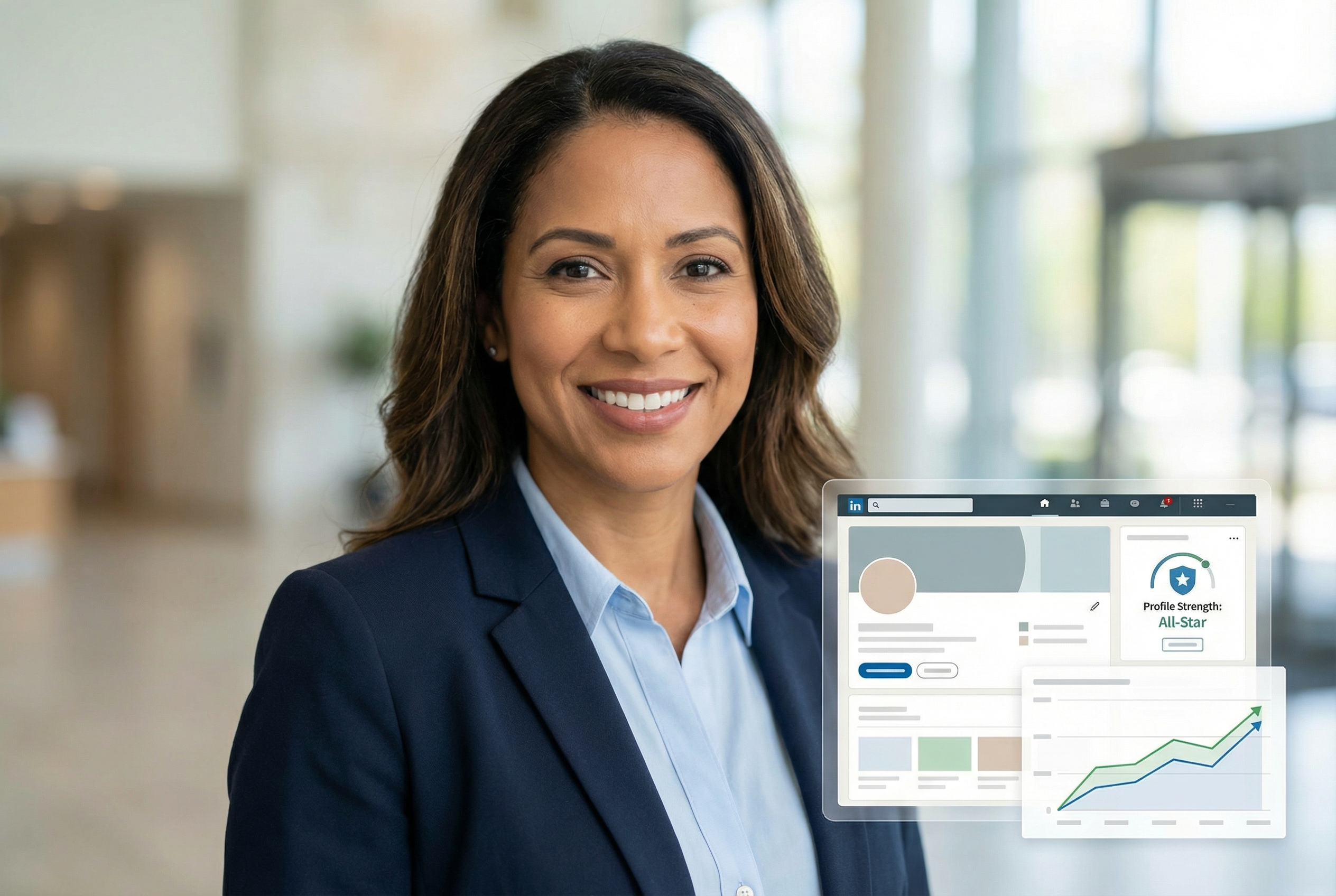
If you want to improve LinkedIn profile for better visibility, you need more than just a good photo and job title. In today’s competitive digital space, professionals must strategically improve LinkedIn profile for better visibility to attract recruiters, clients, and new opportunities. Whether you are a job seeker, founder, or marketer, learning how to improve LinkedIn profile for better visibility can significantly increase your reach and profile views.
Why You Must Improve LinkedIn Profile for Better Visibility
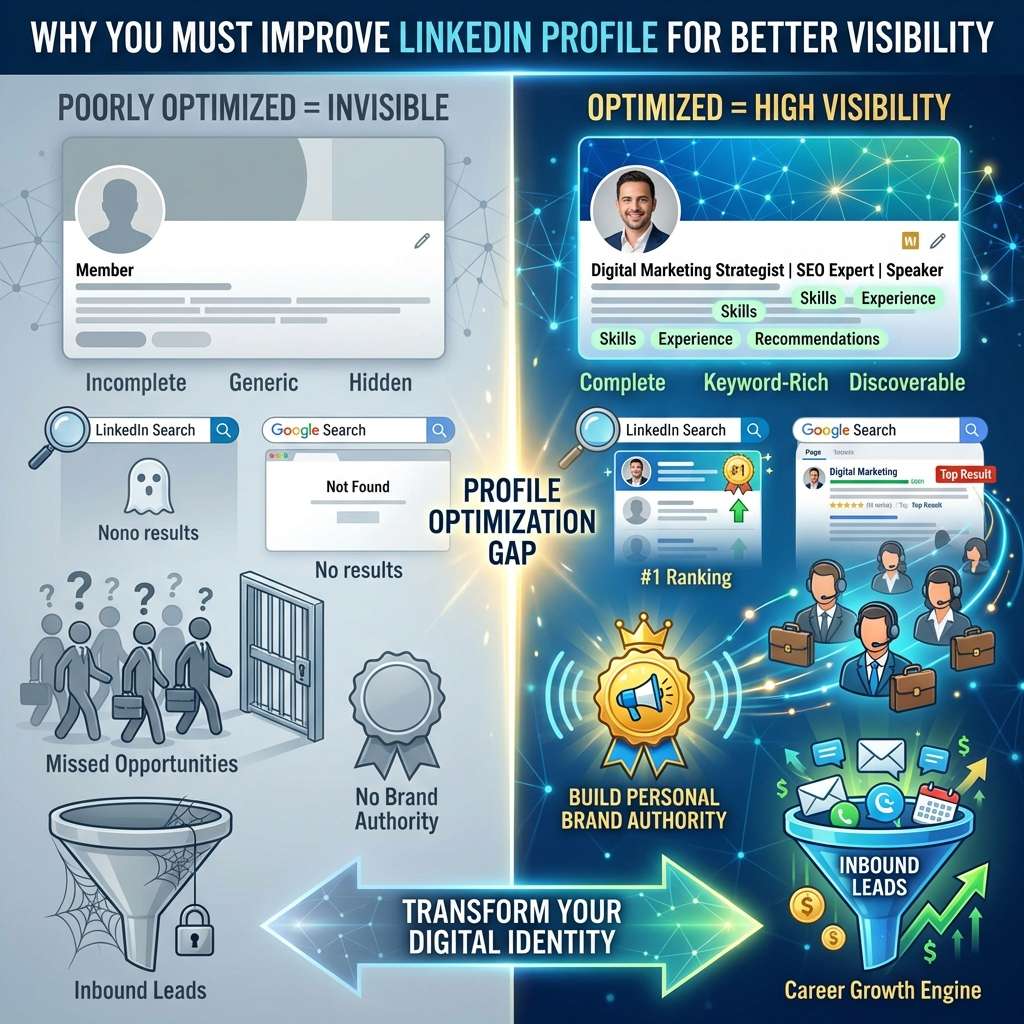
Your LinkedIn profile is your digital identity. When optimized correctly, it:
- Ranks in LinkedIn search results
- Appears in Google search
- Attracts recruiters automatically
- Builds personal brand authority
- Generates inbound leads
If your profile is incomplete or poorly optimized, you are invisible.
Step-by-Step Strategy to Improve LinkedIn Profile for Better Visibility
1. Optimize Your Profile Photo to Improve LinkedIn Profile Visibility
First impressions matter.
- Use a high-resolution image
- Clean background
- Professional appearance
- Friendly expression
Profiles with professional photos receive significantly more views.
2. Write a Keyword-Rich Headline to Improve LinkedIn Profile for Better Visibility
Your headline is one of LinkedIn’s biggest ranking factors.
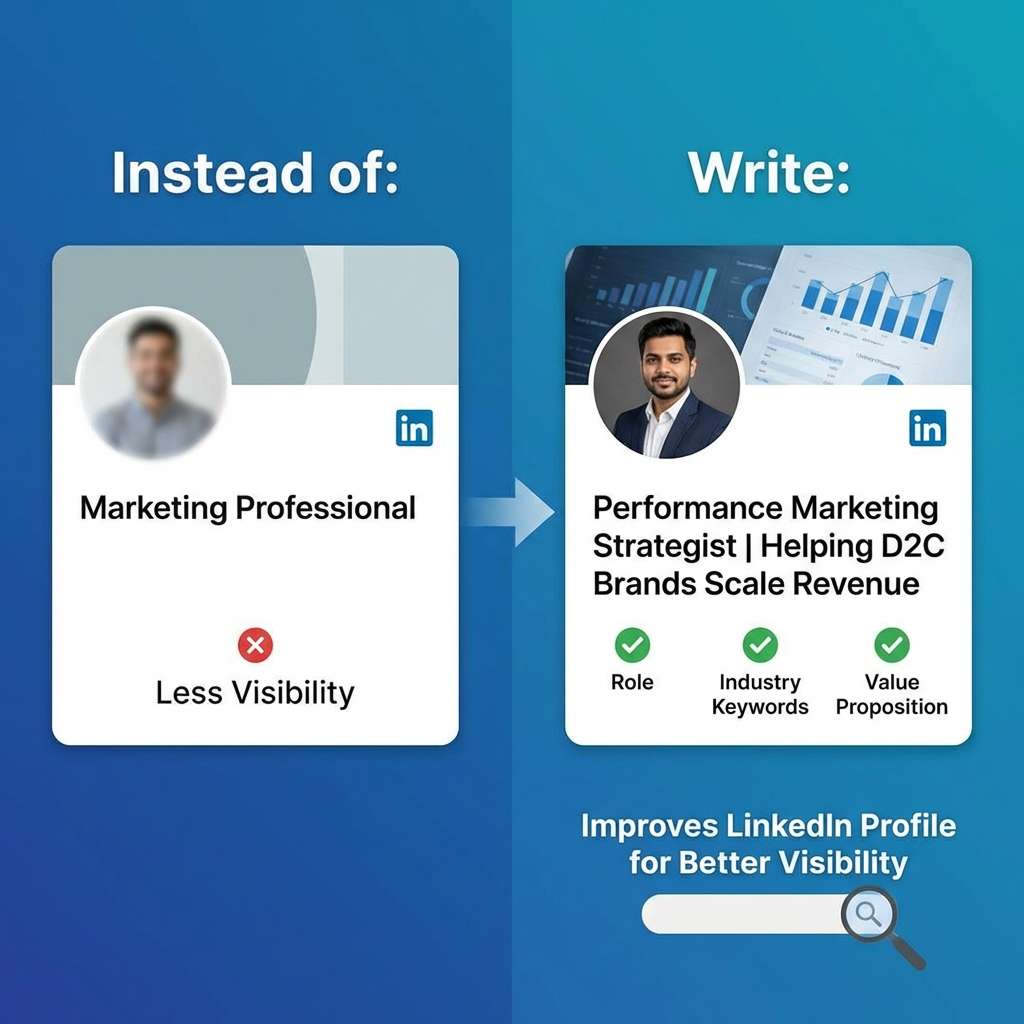
Instead of:
Marketing Professional
Write:
Performance Marketing Strategist | Helping D2C Brands Scale Revenue
Include:
- Your role
- Industry keywords
- Value proposition
This helps improve LinkedIn profile for better visibility in search results.
3. Create an Engaging About Section to Improve LinkedIn Profile Visibility
Your About section should:
- Start with a strong hook
- Clearly explain what you do
- Add measurable results
- End with a call-to-action
Example structure:
Hook:
Most brands struggle with scaling profitably. I help them build predictable growth systems.
Proof:
Generated ₹50L+ revenue for clients through paid ads & retention strategies.
This builds credibility and boosts visibility.
4. Add Results in Experience Section to Improve LinkedIn Profile for Better Visibility
Avoid listing responsibilities.
Instead of:
- Managed campaigns
Write:
- Managed paid campaigns generating ₹50L+ revenue in 6 months
Use numbers. Metrics increase trust and engagement.
5. Use Skills Strategically to Improve LinkedIn Profile Visibility
Add 10–20 relevant skills aligned with your niche.
Prioritize top 3 skills such as:
- LinkedIn Personal Branding
- Growth Strategy
- Performance Marketing
Skills improve discoverability in LinkedIn search.
6. Use the Featured Section to Improve LinkedIn Profile for Better Visibility
The Featured section is a hidden growth lever.
Add:
- Case studies
- Portfolio
- Blog posts
- Media mentions
If you publish insights on platforms like Balistro, you can showcase them here to increase authority and trust.
7: Collect Strong Recommendations
Recommendations are social proof.
Reach out to:
- Managers
- Clients
- Team members
- Founders
Ask them to mention:
- Specific results
- Work ethic
- Impact
Personalized recommendations build trust instantly.
8: Customize Your LinkedIn URL
Instead of:
linkedin.com/in/abhijeet-7862jk98
Make it:
linkedin.com/in/abhijeetpareek
This looks professional and improves search visibility.
9: Stay Active & Post Consistently
Optimization alone is not enough.
To grow faster:
- Post 2–3 times per week
- Share insights
- Write industry opinions
- Tell stories
- Comment strategically on relevant posts
Consistency builds visibility.
10: Optimize for LinkedIn SEO
LinkedIn SEO is real.
To rank higher:
- Add keywords in headline
- Add keywords in About section
- Use keywords in Experience
- Add relevant skills
- Stay active
Think about what your target audience would search for.
Example searches:
- “Performance Marketing Expert India”
- “LinkedIn Personal Branding Strategist”
- “Startup Growth Consultant”
Position your profile accordingly.
Bonus: Profile Banner Strategy
Your banner should:
- Communicate what you do
- Show credibility (logos, achievements)
- Include CTA or website
- Match your personal brand
Avoid default blue LinkedIn banner.
Common Mistakes to Avoid
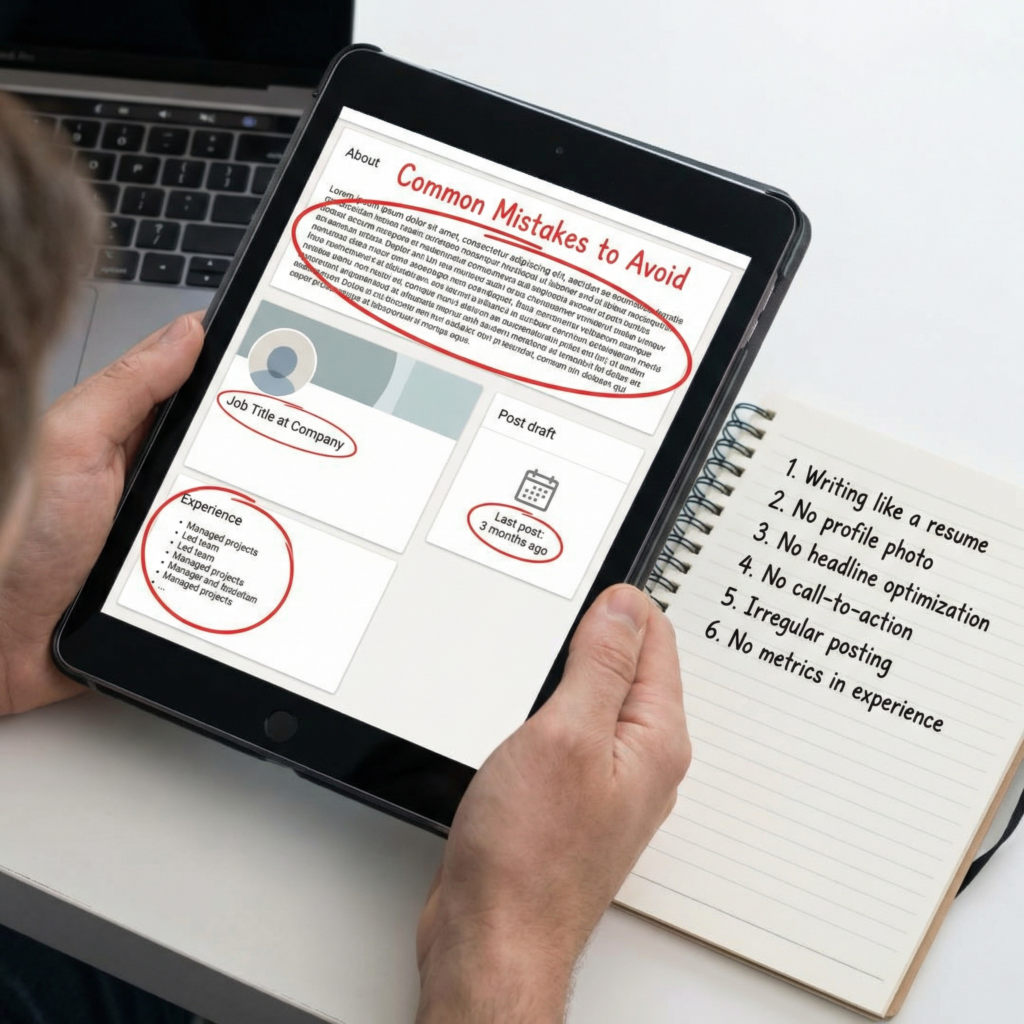
- Writing like a resume
- No profile photo
- No headline optimization
- No call-to-action
- Irregular posting
- No metrics in experience
Final Checklist to Improve Your LinkedIn Profile
✔ Professional photo
✔ Keyword-rich headline
✔ Engaging About section
✔ Results-driven experience
✔ Featured section optimized
✔ Skills aligned with niche
✔ Strong recommendations
✔ Custom URL
✔ Active content posting
Frequently Asked Questions (FAQs)
1. How often should I update my LinkedIn profile?
You should review and update your profile every 3–6 months or whenever you achieve something significant.
2. Does LinkedIn profile optimization help in Google ranking?
Yes. LinkedIn profiles often rank on Google search results, especially for personal names and professional keywords.
3. What is the most important part of a LinkedIn profile?
Your headline and About section are the most important because they impact both visibility and first impressions.
4. How many skills should I add?
Add 10–20 relevant skills, but make sure your top 3 are strongly aligned with your core positioning.
5. Can LinkedIn generate clients?
Absolutely. With optimized positioning and consistent content, LinkedIn can become a strong inbound lead generation channel.
Conclusion
Improving your LinkedIn profile is not about adding more information. It is about strategic positioning.
When optimized correctly, your LinkedIn profile becomes:
- Your digital identity
- Your personal brand engine
- Your opportunity magnet
Start with one section today. Improve it. Then move to the next.
Because in 2026, visibility equals opportunity.
If you want expert guidance on personal branding and digital growth, explore more insights on Balistro.
Your next opportunity is one optimized profile away.
At Balistro, we specialize in helping businesses grow through effective digital marketing strategies. From Google Ads to Meta Ads, we deliver data-driven campaigns that maximize your ROI and drive real results. If you’re looking to boost your online presence, generate leads, or scale your e-commerce business, our expert team is here to help. Contact us today to learn more about how we can support your advertising needs!
Why Social Media Marketing Is Essential for Brand Visibility
Social media platforms collectively reach over 500 million users in India, making them the largest audience pool for brand discovery and engagement. For D2C brands, social media is often the first touchpoint in the customer journey — where potential customers discover products through content, ads, influencer recommendations, and peer reviews.
The shift toward short-form video content on platforms like Instagram Reels, YouTube Shorts, and LinkedIn has created new opportunities for brands to reach audiences organically. Video content generates 1200% more shares than text and image content combined (Source: WordStream), making it the most powerful format for building brand awareness and engagement.
Beyond brand building, social media platforms have evolved into sophisticated advertising ecosystems. Meta’s advanced targeting capabilities, LinkedIn’s professional audience data, and YouTube’s intent-based targeting allow brands to reach precisely the right audience at every stage of the buyer journey. Brands that master both organic and paid social media create a powerful growth flywheel.
Building an Effective Social Media Strategy
- Platform Selection: Choose platforms where your target audience is most active. D2C brands: Instagram, Facebook, YouTube. B2B brands: LinkedIn, YouTube, Twitter/X. Don’t spread too thin — it’s better to excel on 2-3 platforms than be mediocre on 5-6.
- Content Pillars & Calendar: Define 4-5 content pillars that align with your brand expertise and audience interests. Create a content calendar mixing educational content (40%), entertaining/engaging content (30%), promotional content (20%), and user-generated content (10%). Plan content batches weekly for efficient production.
- Community Building: Social media is a two-way channel. Respond to comments promptly, engage with your audience’s content, participate in relevant conversations, and build genuine relationships. Brands with active community management see 3-5x higher engagement rates.
- Paid Social Strategy: Complement organic efforts with targeted paid campaigns. Use lookalike audiences based on your best customers, retarget website visitors and engagers, and test new audience segments regularly. Start with ₹500-1000/day per platform and scale based on results.
- Analytics & Optimization: Track engagement rate, reach, link clicks, and conversion metrics. Identify top-performing content types and posting times. A/B test content formats, copy styles, and CTAs. Optimize based on data, not assumptions about what your audience wants.
Social Media Mistakes That Hurt Your Brand
- Inconsistent posting: Irregular posting signals an inactive brand and hurts algorithmic visibility. Establish a consistent posting schedule — 3-5 times per week for Instagram, 2-3 times for LinkedIn, daily for Twitter — and stick to it using scheduling tools.
- Only posting promotional content: Followers unfollow brands that only sell. Follow the 80/20 rule: 80% of content should educate, entertain, or inspire, and only 20% should be directly promotional. Build value first, and your audience will be receptive to offers.
- Ignoring engagement and comments: Social media is social — brands that don’t respond to comments and DMs miss relationship-building opportunities. Engage with your community daily, respond within 2-4 hours, and make followers feel valued.
- Not leveraging video content: Platforms heavily prioritize video content in their algorithms. Brands that avoid video miss the biggest organic reach opportunity available. Start with simple, authentic video content — it doesn’t need to be professionally produced to perform well.
- Buying followers or engagement: Fake followers destroy your engagement rate, damage algorithmic distribution, and erode brand credibility. Focus on building a genuine audience through valuable content and strategic paid promotion. 1,000 real followers are worth more than 100,000 fake ones.
Frequently Asked Questions
How often should I post on social media?
Optimal posting frequency varies by platform: Instagram 3-5 times per week (plus daily Stories), LinkedIn 2-3 times per week, Facebook 3-5 times per week, and Twitter/X 1-3 times per day. Quality and consistency matter more than frequency — it’s better to post 3 excellent posts per week than 7 mediocre ones.
Which social media platform is best for B2B marketing?
LinkedIn is the most effective social media platform for B2B marketing, with 80% of B2B leads from social media coming through LinkedIn. YouTube is valuable for educational content and product demonstrations. Twitter/X works well for thought leadership and industry conversations. For most B2B brands in India, a LinkedIn-first strategy supplemented by YouTube content is the optimal approach.
How do I increase my social media engagement rate?
Improve engagement by: posting consistently at optimal times (use analytics to find when your audience is most active), using a mix of content formats (especially video and carousels), asking questions and encouraging interaction, responding to every comment, using relevant hashtags strategically, and collaborating with other brands and creators in your niche.
Ready to Grow Your Business?
At Balistro Consultancy, we help D2C and B2B brands achieve measurable marketing results through data-driven strategies. Whether you need Google Ads management, Facebook advertising, SEO services, or email marketing, our team of certified specialists is ready to help you grow.
Book a free consultation call to discuss your marketing goals and discover how Balistro can drive real results for your brand.
Social Media Strategy: Building Engaged Communities That Drive Revenue
Social media marketing success in 2026 is measured not by follower counts but by community engagement, brand sentiment, and ultimately revenue attribution. The brands seeing the best results treat social media as a relationship-building channel first and a sales channel second.
Short-form video has become the dominant content format across all major platforms. Instagram Reels, YouTube Shorts, and LinkedIn video content receive significant algorithmic preference, reaching 2-3x more users than static posts. Brands that invest in video production capabilities — even smartphone-quality authentic content — consistently outperform those that rely solely on image and text posts.
Social commerce has matured significantly, with Instagram Shop, Facebook Marketplace, and in-app checkout features enabling frictionless purchasing directly within social platforms. D2C brands that optimize their social commerce presence see 30-40% higher conversion rates from social traffic compared to directing users to external websites.
Influencer marketing has evolved from celebrity endorsements to micro and nano-influencer partnerships that deliver higher engagement rates and more authentic brand advocacy. Micro-influencers (10K-100K followers) typically achieve 3-5x higher engagement rates than macro-influencers, while nano-influencers (1K-10K) offer the highest trust and conversion rates within their niche communities.
Social listening and sentiment analysis have become essential for brand management and competitive intelligence. Monitoring brand mentions, industry conversations, and competitor activity across social platforms provides real-time insights that inform content strategy, product development, and crisis management. Tools like Brandwatch, Sprout Social, and Mention enable systematic social listening at scale.