How to Use Geo Targeting in Your Paid Ads for Local Campaign Success
TL;DR
In today’s competitive digital market, businesses aiming to enhance their local presence can significantly benefit from Geo Targeting in paid advertising.
In today’s competitive digital market, businesses aiming to enhance their local presence can significantly benefit from Geo Targeting in paid advertising. In fact, by tailoring ads to specific geographic locations, you can ensure that your marketing efforts reach the most relevant audience, thereby improving engagement and return on investment (ROI).
Introduction to Geo Targeting in Paid Ads
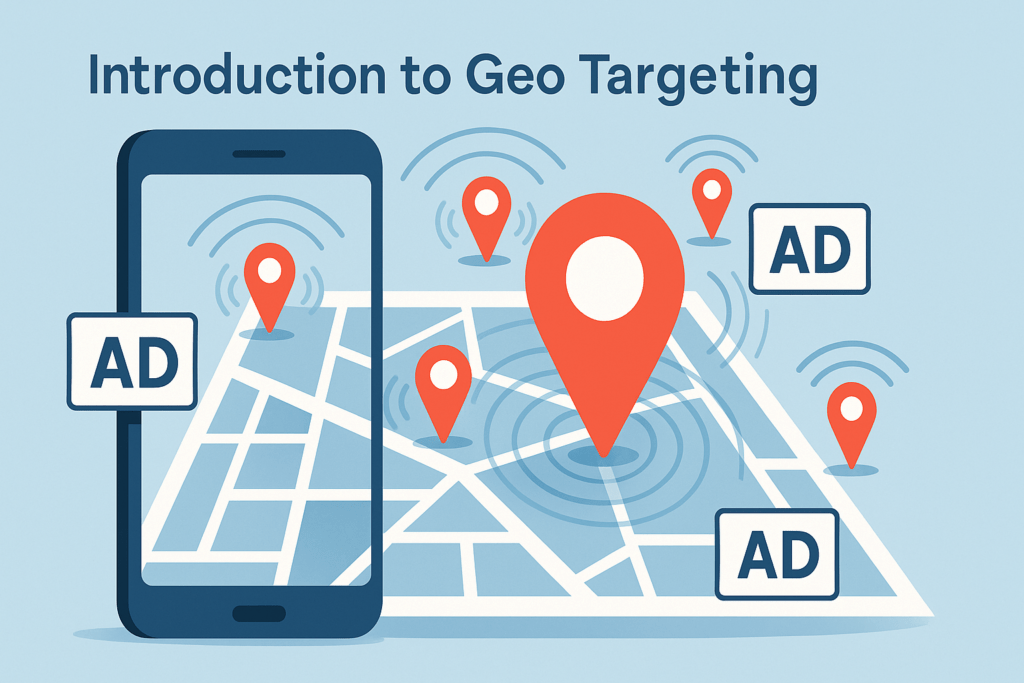
To begin with, geo targeting also known as location targeting involves delivering content or advertisements to users based on their geographic position. Consequently, this strategy allows businesses to focus their marketing efforts on specific regions, cities, or even neighborhoods, ensuring that their messages reach the most relevant audiences.
Benefits of Geo Targeting
First, increased relevance: by targeting users in specific locations, your ads are more likely to resonate with local audiences, leading to higher engagement rates.
Second, improved ROI: focusing on a defined geographic area allows for more efficient use of advertising budgets, thereby reducing wastage and enhancing overall ROI.
Furthermore, enhanced customer experience: by delivering localized content, you can improve the user experience, making your ads more appealing and relatable to nearby users.
Setting Up Geo Targeting in Paid Platforms
–Google Ads: Basic Setup
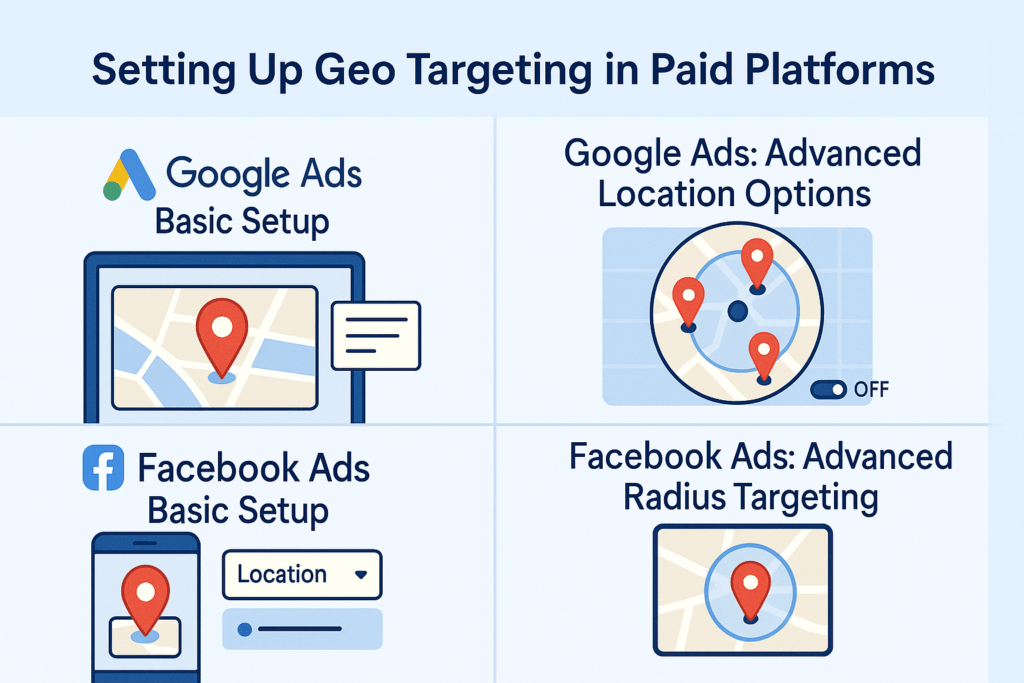
1. Access Campaign Settings: First, log into your Google Ads account and navigate to the campaign you wish to modify.
2. Select Locations: Next, under the Settings tab, find the Locations section. Here, you can target specific countries, regions, or cities.
-Google Ads: Advanced Location Options
1. Include/Exclude Locations: Moreover, utilize the advanced settings to include or exclude certain locations based on user presence or interest.
2. Radius Targeting: Additionally, consider radius targeting to reach users within a specific distance from your physical store or point of interest.
-Facebook Ads: Basic Setup
1. Navigate to Ads Manager: First, open Facebook Ads Manager and either create a new campaign or edit an existing one.
2. Define Audience: Then, in the Audience section, click Edit under Locations.
3. Choose Locations: Afterward, enter the specific cities, regions, or countries you want to target; you can also include or exclude locations according to your objectives.
-Facebook Ads: Advanced Radius Targeting
1. Use Radius Targeting: Finally, similar to Google Ads, Facebook allows you to target users within a certain distance from a chosen location.
Best Practices for Crafting Localized Ad Copy
–Use Local Language and References: Additionally, incorporate local dialects, landmarks, or cultural references to make your ads more relatable.
–Highlight Local Offers: Moreover, emphasize promotions or events specific to the targeted location to increase relevance.
–Include Location in Headlines: Furthermore, mentioning the location in your ad headlines can grab the attention of local users and improve click-through rates.
–Localized Call-to-Action (CTA): Finally, use CTAs that encourage local actions, such as “Visit Us Today” or “Order from Your Neighborhood Store.”
Budget Allocation Strategies for Local vs. Broad Targeting
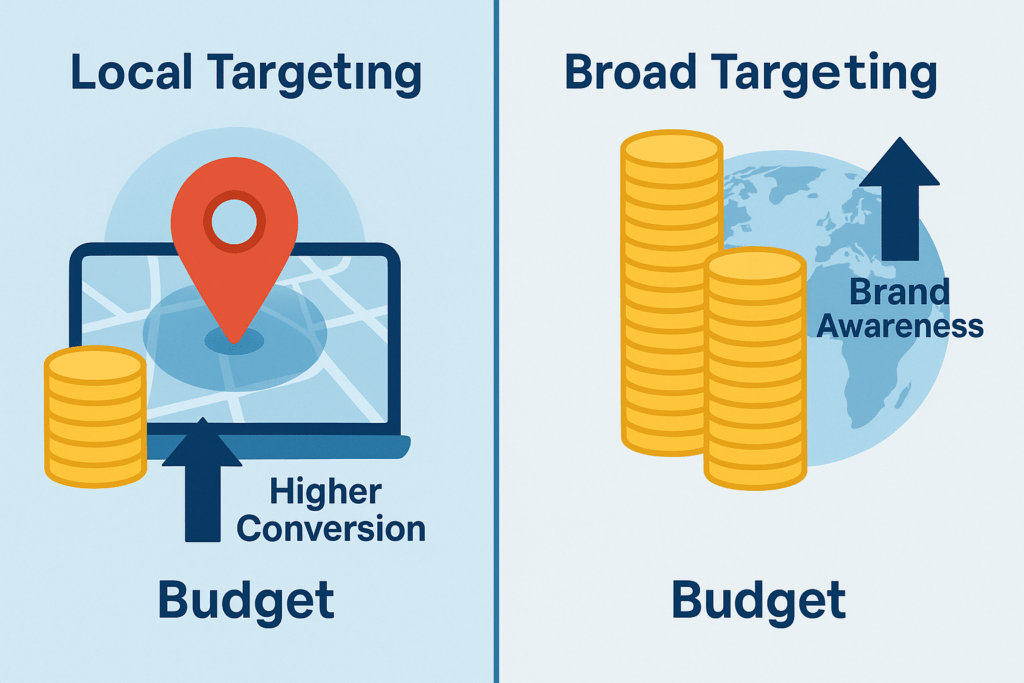
Meanwhile, prioritize high-performing locations by allocating more budget to areas with historically higher engagement and conversion rates. As such, start with a modest budget across various locations, monitor performance, and adjust spending based on results. Furthermore, in high-competition areas, you may need to increase bids to maintain visibility. Consequently, use bid adjustments to optimize budget efficiency across different geographic zones.
Measuring Success: Key Metrics for Geo Targeted Campaigns
–Click-Through Rate (CTR): Moreover, this metric measures the percentage of users who click on your ad after seeing it, indicating ad relevance.
–Conversion Rate: Additionally, tracks the percentage of users who complete a desired action—such as making a purchase or signing up—after clicking your ad.
–Cost Per Lead (CPL): Furthermore, calculates the cost associated with acquiring a lead, helping you assess campaign efficiency.
–Return on Investment (ROI): Finally, this measures the profitability of your campaigns by comparing revenue generated against ad spend.
Common Pitfalls in Geo Targeting and How to Avoid Them
–Overly Narrow Targeting: Nevertheless, targeting too specific a location can limit your audience size and reduce ad reach; ensure your parameters are broad enough to capture sufficient traffic.
–Ignoring Exclusions: Moreover, failing to exclude irrelevant areas can lead to wasted spend; regularly review and update your exclusion settings.
–Neglecting Mobile Users: Additionally, many users access ads via mobile devices; thus, ensure your ads are optimized for mobile viewing.
–Not Monitoring Performance: Finally, regularly analyze campaign metrics to identify underperforming areas and make necessary adjustments.
Real‑World Case Studies related to Geo Targeting
1. Family-Owned Restaurant in New York City
For instance, a family-owned restaurant in New York City used geo targeting to promote a limited-time offer within a 5-mile radius. As a result, the campaign yielded a 30% increase in foot traffic and a 25% boost in sales during the promotion period.
2. California Retail Chain
Similarly, a retail chain with multiple locations across California implemented radius targeting to advertise store-specific deals. Consequently, the approach led to a 40% increase in in-store visits and a 15% rise in online orders from local customers.
Future Trends in Location Based Advertising
1. Geofencing
Geofencing allows businesses to create virtual perimeters around specific locations, enabling them to send targeted messages when users enter or exit these areas.
2. Beacon Technology
Furthermore, beacons transmit signals to nearby devices, allowing businesses to deliver personalized offers in real time to customers on-site.
3. Augmented Reality (AR)
Moreover, AR can provide immersive experiences, enabling users to interact with ads in innovative, engaging ways.
4. Artificial Intelligence (AI)
Finally, AI-powered tools can analyze user behavior and preferences to deliver highly personalized and timely advertisements.
Conclusion and Actionable Next Steps in Geo Targeting
In conclusion, implementing geo targeting in your paid ads can significantly improve local engagement and ROI. Therefore, start by defining your target locations and setting up geo targeting in Google Ads and Facebook Ads. Then, craft localized ad copy that resonates with local audiences and allocate your budget strategically. Finally, monitor performance metrics regularly and optimize your campaigns based on data-driven insights.
FAQs Related to Geo Targeting
1. What is geo targeting in paid advertising? In essence, geo targeting delivers ads to users based on their geographic location—such as country, region, city, or a specific radius—ensuring your ads reach the most relevant audiences.
2. How to choose the right radius for local ads? Typically, the radius depends on your business type and customer behavior; for example, a local coffee shop might target a 1–3 mile radius, whereas a regional service provider could consider a 10–15 mile radius.
3. Can you exclude locations within your target area? Yes, both Google Ads and Facebook Ads let you exclude specific zip codes or regions within your target area to avoid irrelevant impressions.
4. What is the minimum budget for geo targeted campaigns? Generally, set your daily budget to at least five times your cost-per-result goal; for instance, if your target cost per lead is ₹100, start with a daily budget of at least ₹500.
5. How often should you review geo targeting performance? Ideally, review your campaign performance at least once a week to monitor metrics like CTR, conversion rate, and CPL, and to make timely optimizations.
At Balistro, we specialize in helping businesses grow through effective digital marketing strategies. From Google Ads to Meta Ads, we deliver data-driven campaigns that maximize your ROI and drive real results. If you’re looking to boost your online presence, generate leads, or scale your e-commerce business, our expert team is here to help. Contact us today to learn more about how we can support your advertising needs!
Ready to Grow Your Business?
Book a free 30-minute strategy call with Balistro. We’ll audit your marketing and show you exactly where your biggest growth opportunities are.
Why Strategic Digital Marketing Is Essential for Business Growth in India
India’s digital advertising market is projected to reach ₹62,000 crore by 2026, growing at 25% CAGR (Source: Dentsu Digital Report). This explosive growth means more businesses are competing for digital attention than ever before. Without a strategic digital marketing approach, brands risk being invisible to their target audience.
The most successful brands in India’s digital market don’t rely on a single channel — they build integrated marketing ecosystems. Brands using 3+ digital channels see 287% higher purchase rates than single-channel campaigns (Source: Omnisend). This multi-channel approach, when executed strategically, creates multiple touchpoints throughout the customer journey.
For D2C and B2B brands specifically, digital marketing has become the primary growth driver. With 78% of Indian businesses increasing their digital marketing budgets in 2025, competitive demands not just presence but excellence across search, social, email, and content channels.
Building an Integrated Digital Marketing Strategy
- Customer Research & Persona Development: Start with deep customer research — analyze your existing customer data, conduct surveys, review search queries, and study competitor audiences. Build detailed buyer personas including demographics, pain points, digital behavior, and preferred content formats.
- Channel Strategy & Prioritization: Not every channel is right for every business. D2C brands should prioritize Meta Ads, Google Shopping, email marketing, and SEO. B2B brands focus on Google Search, LinkedIn, content marketing, and email nurturing. Start with 2-3 core channels and expand based on data.
- Content Strategy & Calendar: Develop a content strategy that supports every stage of the funnel — awareness (blog posts, social content), consideration (case studies, comparison guides), and decision (product pages, testimonials). Create a monthly content calendar with themes aligned to business goals and seasonal opportunities.
- Paid Media Strategy: Structure paid campaigns by funnel stage with appropriate budgets. Allocate 40% to prospecting (awareness), 30% to remarketing (consideration), and 30% to conversion campaigns. Use cross-channel remarketing to nurture prospects across platforms.
- Measurement & Optimization: Implement comprehensive tracking across all channels. Build a unified dashboard that shows the complete customer journey. Use data to continuously optimize — shift budget to top-performing channels, refine targeting, and improve creative based on performance insights.
Digital Marketing Mistakes That Stunt Business Growth
- No clear strategy or goals: Running ads and posting content without a coherent strategy wastes budget and effort. Define specific, measurable goals for each channel — traffic, leads, revenue — and build campaigns that directly support those objectives.
- Channel silos: Running each marketing channel independently creates disconnected customer experiences and misses cross-channel optimization opportunities. Integrate your channels so email supports paid media, content supports SEO, and social supports brand building in a cohesive ecosystem.
- Chasing trends over fundamentals: New platforms and tactics are exciting, but sustainable growth comes from mastering fundamentals — compelling messaging, strong offers, excellent landing pages, and data-driven optimization. Build a strong foundation before experimenting with emerging channels.
- Underinvesting in retention: Most brands overspend on acquisition and underinvest in retention. Retaining existing customers costs 5-7x less than acquiring new ones. Build email automation, loyalty programs, and post-purchase experiences that maximize customer lifetime value.
- Not investing in brand: Performance marketing drives immediate results, but brand building creates long-term competitive advantage. Strong brands enjoy higher conversion rates, lower acquisition costs, and greater pricing power. Allocate at least 20-30% of marketing budget to brand-building activities.
Frequently Asked Questions
How much should a small business spend on digital marketing in India?
Small businesses in India should allocate 7-15% of revenue to digital marketing, with a minimum of ₹25,000-50,000 per month for meaningful impact. Start with the channels most likely to drive immediate revenue — Google Ads for intent-based traffic and social media ads for awareness — then expand as you see returns.
What is the most effective digital marketing channel for B2B?
For B2B companies in India, Google Search Ads and LinkedIn are typically the most effective channels for lead generation. Content marketing and SEO build long-term authority and organic lead flow. Email marketing nurtures leads through longer B2B sales cycles. The optimal mix depends on your industry, target audience, and sales process.
How do I measure digital marketing success?
Measure success against your business objectives: revenue growth, customer acquisition cost (CAC), return on ad spend (ROAS), organic traffic growth, conversion rates, and customer lifetime value (CLV). Avoid vanity metrics like impressions or followers unless they directly correlate with business outcomes. Set up proper attribution to understand which channels drive real results.
Ready to Grow Your Business?
At Balistro Consultancy, we help D2C and B2B brands achieve measurable marketing results through data-driven strategies. Whether you need Google Ads management, Facebook advertising, SEO services, or email marketing, our team of certified specialists is ready to help you grow.
Book a free consultation call to discuss your marketing goals and discover how Balistro can drive real results for your brand.