
In the ever-evolving world of digital advertising, 2025 brings new challenges and opportunities for businesses aiming to optimize their marketing strategies. Two major contenders dominate the landscape: Google Ads and Meta Ads. If you’re wondering where to invest your budget for maximum return on investment (ROI), this comprehensive comparison of Google Ads vs. Meta Ads in 2025 will help you make an informed decision.
The Rise of Google Ads vs. Meta Ads in 2025

Before diving into specifics, let’s understand why these platforms are at the forefront of digital advertising. Both Google and Meta (formerly Facebook) have evolved to meet the changing needs of businesses:
–Google Ads: Known for its dominance in search advertising, Google Ads continues to be a go-to platform for businesses targeting high-intent users. With advancements in AI and machine learning, Google Ads now offers better audience segmentation, predictive analytics and dynamic bidding strategies.
–Meta Ads: On the other hand, Meta Ads have expanded beyond traditional Facebook advertising to include Instagram, Messenger and WhatsApp. Meta leverages user behavior data to create highly personalized ads, making it a powerful choice for brand storytelling and visual advertising.
Key Differences: Google Ads vs. Meta Ads
When comparing Google Ads vs. Meta Ads, it’s essential to evaluate their strengths and limitations:
1. Audience Targeting
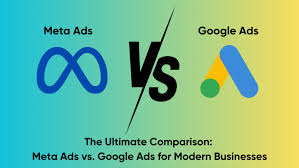
Google Ads: Excels in targeting users based on search intent. For instance, someone searching for “best running shoes” is likely ready to make a purchase.
Meta Ads: Specializes in behavior-based targeting, such as interests, past interactions and demographic data, making it ideal for creating demand and building brand awareness.
2. Ad Formats
Google Ads: Includes search ads, display ads, video ads (via YouTube) and shopping ads, catering to a broad spectrum of marketing goals.
Meta Ads: Focuses on visually engaging formats, including carousel ads, Stories and reels, ideal for creative storytelling.
3. Cost
Google Ads: Generally has higher cost-per-click (CPC) rates due to intense competition for high-intent keywords.
Meta Ads: Offers more affordable options for businesses with smaller budgets, though the competition is increasing.
4. Performance Metrics
Google Ads: Focuses on conversions, click-through rates (CTR) and ROI.
Meta Ads: Measures success through engagement metrics such as likes, shares, comments and overall reach.
Which Is Better in 2025: Google Ads vs. Meta Ads?
Choosing between Google Ads vs. Meta Ads depends on your business goals:
–When to Choose Google Ads:
If your primary objective is to drive immediate conversions or target users with high purchase intent, Google Ads should be your platform of choice. For example, industries like e-commerce, B2B services and local businesses benefit greatly from search ads.
–When to Choose Meta Ads:
Meta Ads are perfect for brand-building campaigns. If your goal is to create demand, build customer loyalty or showcase visually appealing products, Meta Ads offer a competitive edge.
How to Maximize ROI with Google Ads vs. Meta Ads in 2025
Here are actionable tips for leveraging each platform:
1. Google Ads Strategies:
-Focus on long-tail keywords like “Google Ads vs. Meta Ads comparison” to attract specific audiences.
-Use responsive search ads to optimize your message dynamically.
-Leverage Google’s Performance Max campaigns to automate and improve results.
2. Meta Ads Strategies:
-Utilize video content, as short-form videos continue to dominate engagement rates.
-Retarget users who interacted with your content to nurture leads.
-Test different ad formats, such as Stories and reels, to determine what resonates with your audience.
Why Both Platforms Matter
In 2025, an integrated approach that combines both Google Ads and Meta Ads is often the best strategy. While Google Ads captures high-intent customers, Meta Ads nurtures them through engaging content. By balancing your investment across these platforms, you can achieve a holistic digital marketing strategy that drives both short-term conversions and long-term growth.
Conclusion
When comparing Google Ads vs. Meta Ads in 2025, there’s no one-size-fits-all answer. The choice depends on your business goals, target audience and budget. For businesses aiming for immediate results, Google Ads remains unmatched. However, if your focus is on brand storytelling and customer engagement, Meta Ads are a powerful tool.
Evaluate your objectives carefully and consider allocating resources to both platforms to create a well-rounded strategy. Remember, the key to success in 2025 lies in staying agile, testing different approaches and continuously optimizing your campaigns.
By understanding the strengths and limitations of Google Ads vs. Meta Ads, you’ll be better equipped to make the right investment decisions for your business in 2025.
At Balistro, we specialize in helping businesses grow through effective digital marketing strategies. From Google Ads to Meta Ads, we deliver data-driven campaigns that maximize your ROI and drive real results. If you’re looking to boost your online presence, generate leads, or scale your e-commerce business, our expert team is here to help. Contact us today to learn more about how we can support your advertising needs!
Ready to Grow Your Business?
Book a free 30-minute strategy call with Balistro. We’ll audit your marketing and show you exactly where your biggest growth opportunities are.
Why Google Ads Mastery Matters for Indian Businesses in 2026
Google processes over 8.5 billion searches daily, and India accounts for the second-largest search market globally. For D2C and B2B brands operating in this competitive landscape, Google Ads represents one of the most direct paths to qualified customer acquisition. With the right strategy, brands can appear at the exact moment potential customers are searching for their products or services.
The shift toward Performance Max campaigns and AI-powered bidding has fundamentally changed how Google Ads works. Brands that understand these changes and adapt their strategies accordingly are seeing significantly better results — often 2-4x improvement in ROAS compared to those still using legacy campaign structures.
For businesses in India, where digital ad spend is projected to reach ₹62,000 crore by 2026, the opportunity cost of poor Google Ads management is substantial. Every rupee wasted on poorly targeted ads or inefficient bidding is a rupee that could have driven real revenue growth.
Step-by-Step Implementation Guide
Implementing an effective Google Ads strategy requires a systematic approach. Here’s how Balistro’s Google Ads specialists recommend structuring your campaigns for maximum impact:
- Audience Research & Keyword Mapping: Start with thorough keyword research using Google Keyword Planner, SEMrush, or Ahrefs. Map keywords to specific stages of the buyer journey — awareness (broad), consideration (specific), and decision (branded/transactional). Focus on keywords with commercial intent for better conversion rates.
- Campaign Structure & Ad Group Organization: Build tightly themed ad groups with 10-20 closely related keywords each. Use Single Keyword Ad Groups (SKAGs) for your highest-value terms. Separate campaigns by match type, device, and geographic targeting for granular bid control.
- Ad Copy & Extension Optimization: Write 3-5 responsive search ad variations per ad group. Include your primary keyword in headlines, highlight unique selling propositions, and add clear calls-to-action. Implement all relevant ad extensions — sitelinks, callouts, structured snippets, and call extensions.
- Landing Page Alignment: Ensure landing pages match ad intent precisely. Page load speed should be under 3 seconds, and the primary CTA should be above the fold. A/B test landing page elements systematically for continuous improvement.
- Bid Strategy & Budget Allocation: Start with manual CPC bidding to gather data, then transition to automated strategies like Target CPA or Target ROAS once you have 30+ conversions per month. Allocate 60-70% of budget to proven campaigns and 20-30% to testing new approaches.
- Performance Max Integration: Set up Performance Max campaigns with high-quality creative assets across all formats. Provide clear audience signals based on your existing customer data. Monitor asset performance reports weekly and replace underperforming creatives.
Common Google Ads Mistakes That Waste Budget
After managing over ₹50 lakh in monthly Google Ads spend across dozens of Indian brands, Balistro’s team has identified the most common mistakes that silently drain advertising budgets:
- Ignoring negative keywords: Without a robust negative keyword list, your ads appear for irrelevant searches. We recommend reviewing search term reports weekly and adding negatives aggressively — most accounts need 200-500 negative keywords to run efficiently.
- Using broad match without Smart Bidding: Broad match keywords without AI-powered bidding leads to wasted spend on low-intent searches. If you use broad match, always pair it with Target CPA or Target ROAS bidding strategies.
- Not tracking micro-conversions: Only tracking final purchases or leads misses critical optimization signals. Track add-to-cart, form starts, scroll depth, and engagement events to give Google’s algorithm more data points for optimization.
- Setting and forgetting campaigns: Google Ads requires active management. Bid landscapes, competitor activity, and seasonal trends change constantly. Schedule weekly optimization reviews covering bids, ad copy performance, and audience adjustments.
- Poor mobile experience: Over 75% of Google searches in India happen on mobile devices. If your landing pages aren’t mobile-optimized with fast load times and easy-to-tap CTAs, you’re losing the majority of your potential conversions.
Frequently Asked Questions
What is the minimum budget for Google Ads in India?
While Google Ads has no official minimum, we recommend a starting budget of ₹30,000-50,000 per month for meaningful data collection and optimization. Lower budgets can work for highly targeted local campaigns, but most D2C and B2B brands need ₹50,000+ monthly to generate statistically significant results across search and display channels.
How do I know if my Google Ads agency is performing well?
Key performance indicators include: ROAS above 3x for e-commerce brands, cost-per-lead within industry benchmarks, improving quality scores over time, and transparent reporting with clear attribution. A good agency should also show month-over-month improvement in conversion rates and provide strategic recommendations — not just manage existing campaigns.
Should I run Google Ads alongside SEO?
Absolutely. Google Ads and SEO are complementary strategies. Google Ads provides immediate visibility and traffic while SEO builds long-term organic presence. Data from your Google Ads campaigns — especially high-converting keywords and ad copy — directly informs your SEO strategy. Brands running both typically see 25% higher overall conversion rates than those using either channel alone.
Ready to Grow Your Business?
At Balistro Consultancy, we help D2C and B2B brands achieve measurable marketing results through data-driven strategies. Whether you need Google Ads management, Facebook advertising, SEO services, or email marketing, our team of certified specialists is ready to help you grow.
Book a free consultation call to discuss your marketing goals and discover how Balistro can drive real results for your brand.
Advanced Google Ads Strategies for 2026
As Google’s advertising ecosystem continues to evolve, staying ahead requires understanding and implementing advanced strategies. Performance Max campaigns now leverage Google’s AI across all channels simultaneously — Search, Display, YouTube, Gmail, Maps, and Discovery — making them essential for brands seeking maximum reach and efficiency.
Smart Bidding strategies have become significantly more sophisticated, using real-time signals including device, location, time of day, audience lists, and ad characteristics to optimize bids for each individual auction. Brands that transition from manual bidding to Target ROAS or Target CPA typically see 15-25% improvement in campaign efficiency within the first 60 days.
Audience segmentation in Google Ads now extends beyond basic demographics to include custom intent audiences, in-market audiences, and remarketing lists for search ads (RLSA). Combining these audience signals with keyword targeting creates a powerful precision marketing approach that significantly improves conversion rates while reducing wasted spend.
First-party data integration has become critical as third-party cookie deprecation approaches. Brands that upload customer match lists, implement enhanced conversions, and build robust remarketing audiences are better positioned to maintain targeting accuracy. Google’s Consent Mode and enhanced conversions help bridge the data gap while respecting user privacy.
For e-commerce brands, Google Shopping and Product Listing Ads (PLAs) continue to drive the majority of retail search ad clicks. Optimizing product feeds with detailed titles, descriptions, high-quality images, and competitive pricing is essential for Shopping campaign success. Supplemental feeds allow brands to enhance product data beyond what their e-commerce platform provides natively.