
Direct-to-consumer (D2C) brands in India face a specific set of growth challenges: high customer acquisition costs, fierce category competition, thin unit economics, and the constant pressure to scale profitably. Traditional advertising agencies, with their manual optimisation cycles and limited data sophistication, are increasingly unable to keep up with what D2C brands actually need.
AI-powered advertising agencies are filling this gap — using automation, machine learning, and AI-native ad platform features to scale D2C results in ways that were simply not possible three years ago. This article explains how, what to look for when choosing an AI-powered advertising agency, and the results D2C brands can realistically expect.
What Is an AI-Powered Advertising Agency?
An AI-powered advertising agency uses artificial intelligence and automation as core infrastructure for campaign strategy, execution, and optimisation. This goes beyond standard platform automation — it means building systems and workflows where AI handles the high-volume, data-intensive optimisation tasks while human strategists focus on direction, creative thinking, and client strategy.
The key AI-native advertising tools that AI-powered agencies leverage include Google Performance Max, Meta Advantage+ Shopping Campaigns, programmatic advertising platforms with ML bidding, AI creative testing and generation tools, and custom attribution and analytics models.
At Balistro Consultancy, these are not just platform features we use — they are the core infrastructure around which we design every D2C client campaign.
Google Performance Max: AI-Driven Campaign Automation at Scale
Google Performance Max (PMax) is Google’s fully automated campaign type that runs across all Google channels — Search, Shopping, Display, YouTube, Gmail, and Maps — simultaneously. PMax uses machine learning to allocate budget dynamically across channels and optimise for your conversion goals.

For D2C brands, PMax has been transformative — particularly for e-commerce. A well-structured PMax campaign with high-quality asset groups, strong product feeds, and proper conversion tracking can identify conversion opportunities across the Google ecosystem that manual campaigns would never find.
The critical factor is setup quality. PMax campaigns that are poorly structured — with generic assets, weak conversion signals, or missing audience inputs — will underperform. Our Google Ads team at Balistro structures PMax campaigns with detailed asset groups, first-party audience signals, and value-based bidding to ensure the AI algorithm has every advantage to optimise effectively from day one.
For a D2C home goods brand we manage, properly structured PMax campaigns delivered 52% more revenue at 28% lower cost per purchase compared to equivalent manual campaign structures — driven by PMax’s ability to find converting users across channels and time windows that manual targeting missed.
Meta Advantage+: AI-Native Social Advertising for D2C Scale
Meta’s Advantage+ suite — particularly Advantage+ Shopping Campaigns — is Meta’s AI-powered advertising product designed specifically for e-commerce and D2C brands. ASC automates audience targeting, creative selection, and budget allocation using Meta’s vast behavioural data and machine learning infrastructure.
Traditional Meta campaign management involved carefully constructed audience targeting — interest stacks, lookalikes, retargeting layers — with manual budget splits between them. Advantage+ effectively replaces this manual architecture with AI-automated targeting, often finding high-converting audiences that manual targeting would never discover.
At Balistro, our Facebook and Instagram advertising approach now centres on Advantage+ structures for D2C e-commerce clients, supported by high-quality creative assets that give Meta’s AI the raw material to optimise. The results consistently outperform equivalent manual campaign structures by 20-40% on ROAS.
Programmatic Advertising: AI Bidding at Scale
For D2C brands with awareness-building goals or large enough budgets to run across the open web, programmatic advertising with AI bidding extends the reach of performance campaigns beyond Google and Meta.
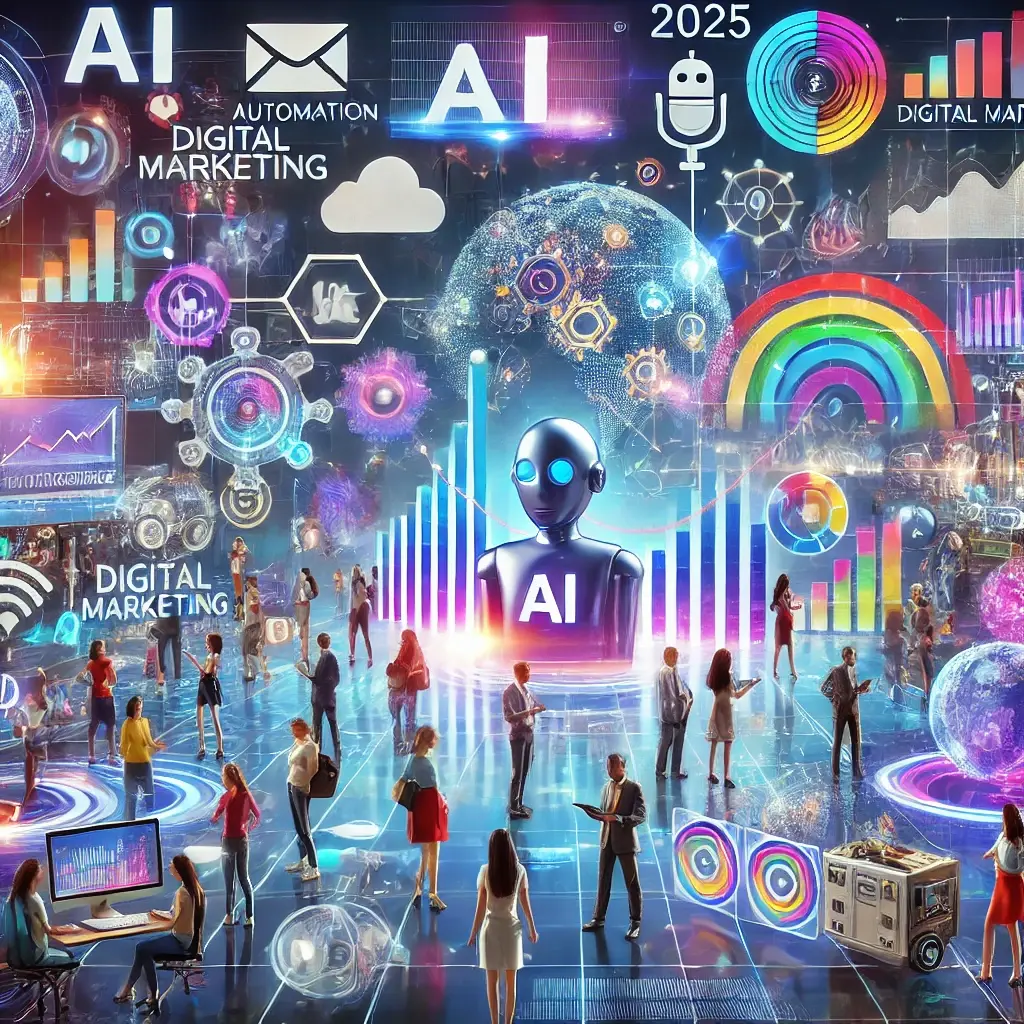
Modern programmatic platforms use ML bidding to evaluate every ad impression against conversion probability signals and bid accordingly — achieving CPMs that reflect actual performance value rather than fixed price floors. For upper-funnel awareness campaigns, this means reaching high-intent audiences efficiently at scale.
What to Look For When Choosing an AI-Powered Advertising Agency
Not every agency that claims to use AI actually does so in a meaningful way. Platform automation features exist by default — using them does not make an agency AI-powered. Here is what genuinely differentiates an AI-powered advertising agency:
- Deep AI campaign architecture: The agency should explain specifically how they structure campaigns to maximise AI learning — not just that they use Smart Bidding or Advantage+.
- First-party data strategy: AI-powered agencies use your CRM and customer data as inputs to improve targeting and attribution — not just rely on platform-native audiences.
- Creative testing at scale: Genuine AI-powered agencies test significantly more creative variables simultaneously than traditional agencies — and have a systematic process for doing so.
- Attribution sophistication: They should use attribution models that go beyond last-click and explain how budget allocation decisions are informed by multi-touch data.
- Transparent AI reasoning: They should be able to explain what the AI is optimising for, why, and what human decisions are made on top of AI recommendations.
Results D2C Brands Can Expect From an AI-Powered Advertising Agency
Realistic expectations are important here. AI-powered advertising does not deliver overnight results — the machine learning systems need data to learn, and the first 30-60 days of any AI-native campaign structure involves a learning phase. But the medium-term results are consistently better than traditional approaches:
- ROAS improvement: Brands typically see 25-55% ROAS improvement within 90 days of switching to properly structured AI-powered campaigns, compared to their previous manual campaign results.
- Lower customer acquisition cost: AI audience optimisation identifies high-converting users more efficiently, reducing CAC by 20-40% in most cases.
- Faster creative learning: AI creative testing identifies winning creative angles 3-5x faster than manual testing, meaning less budget wasted on underperforming creatives.
- Compounding improvement: Unlike manual campaigns that plateau, AI-powered campaigns improve continuously as the algorithms accumulate more conversion data.
Why Balistro Is Built for D2C Performance at Scale
Balistro Consultancy specialises in D2C and B2B brand performance marketing, and our AI-powered approach is designed specifically for the growth challenges these brands face. We do not use AI as a feature — we build campaigns from the ground up to leverage AI-native platform capabilities and custom data models.
Our D2C clients see average ROAS improvements of 35-55% within the first six months, driven by proper AI campaign architecture, systematic creative testing, and first-party data integration that traditional agencies do not implement.
Ready to work with an AI-powered marketing agency? Book a free strategy call with Balistro today and find out exactly what AI-powered advertising can deliver for your D2C brand.
Why AI and Marketing Automation Are Reshaping the Industry
Artificial intelligence and marketing automation have moved from experimental technology to essential business infrastructure. In 2026, brands using AI-powered marketing tools report 30-50% improvements in campaign efficiency, while marketing automation drives 14.5% increase in sales productivity and 12.2% reduction in marketing overhead (Source: Nucleus Research).

For Indian businesses competing in an increasingly digital marketplace, AI adoption is no longer optional — it’s a competitive necessity. From AI-powered bidding algorithms in Google and Meta Ads to automated email workflows and predictive analytics, the brands that leverage these technologies effectively are outpacing those that rely solely on manual processes.
The evolution of large language models like Claude and GPT has opened entirely new possibilities for content creation, customer service automation, and data analysis. Marketing teams that integrate these tools into their workflows are producing more content, responding faster to market changes, and making better data-driven decisions — all with leaner teams.
Implementing AI and Automation in Your Marketing Stack
- Audit Your Current Workflow: Identify repetitive, time-consuming tasks that could benefit from automation — report generation, bid management, email scheduling, social media posting, and basic customer inquiries. Prioritize tasks with the highest time-savings and lowest implementation risk.
- Start with Platform-Native AI: Before investing in third-party tools, leverage AI features built into your existing platforms — Google’s Smart Bidding, Meta’s Advantage+ campaigns, Klaviyo’s predictive analytics, and HubSpot’s AI content assistant. These require no additional investment and provide immediate value.
- Build Automated Workflows: Set up marketing automation workflows for common scenarios: lead nurturing sequences, abandoned cart recovery, post-purchase follow-ups, review requests, and re-engagement campaigns. Map out the full customer journey and automate touchpoints that don’t require human judgment.
- Integrate AI Content Tools: Use AI assistants for content creation acceleration — generating first drafts, brainstorming headlines, creating ad copy variations, and repurposing content across formats. Always review and refine AI-generated content for accuracy, brand voice, and uniqueness.
- Set Up Custom Automations: For more advanced needs, build custom automation tools that connect your marketing platforms. Use APIs to sync data between your CRM, ad platforms, and analytics tools. Automate reporting dashboards that update in real-time without manual data pulling.
AI Marketing Mistakes to Avoid
- Automating without strategy: Automation amplifies both good and bad strategies. Before automating any marketing process, ensure the underlying strategy is sound. Automating a poorly designed email sequence just sends bad emails faster.
- Over-relying on AI for content: AI-generated content without human oversight risks brand voice inconsistency, factual errors, and generic messaging. Use AI to accelerate content creation, but always have human editors review for accuracy, quality, and brand alignment.
- Ignoring the human element: Not every customer interaction should be automated. Complex inquiries, complaint resolution, and high-value relationship building require human touch. Use automation for routine tasks and free up your team for high-impact human interactions.
- Not measuring automation ROI: Track the business impact of every automation you implement — time saved, revenue generated, costs reduced. Regularly audit automated workflows to ensure they’re still performing well and haven’t become stale or irrelevant.
- Failing to maintain and update: Marketing automation requires ongoing maintenance. Algorithms change, platforms update, and market conditions shift. Review and optimize automated workflows quarterly to ensure they remain effective and aligned with current best practices.
Frequently Asked Questions
Will AI replace marketing agencies?
AI won’t replace marketing agencies, but agencies that use AI will replace those that don’t. AI handles repetitive tasks like bid optimization, basic content generation, and data analysis faster and at scale. However, strategic thinking, creative direction, brand building, and complex problem-solving still require human expertise. The most effective approach combines AI efficiency with human creativity and judgment.
What AI tools are most useful for digital marketing?
Essential AI marketing tools in 2026 include: Claude and GPT for content creation and analysis, Google’s AI-powered Smart Bidding for ad optimization, Jasper or Copy.ai for ad copywriting, Midjourney for creative assets, and platform-native AI features in Klaviyo, HubSpot, and Salesforce for automation. The best tool depends on your specific needs and existing tech stack.
How do I get started with marketing automation?
Start small with high-impact automations: set up a welcome email series for new subscribers, configure abandoned cart recovery emails, and enable Google Ads Smart Bidding. These three automations alone can significantly improve marketing performance with minimal technical complexity. Expand gradually as you see results and build confidence in the technology.
Ready to Grow Your Business?
At Balistro Consultancy, we help D2C and B2B brands achieve measurable marketing results through data-driven strategies. Whether you need Google Ads management, Facebook advertising, SEO services, or email marketing, our team of certified specialists is ready to help you grow.
Book a free consultation call to discuss your marketing goals and discover how Balistro can drive real results for your brand.