
In today’s fiercely competitive SEO landscape, chasing high-volume search terms is the norm—but it isn’t the only path to success. There’s an untapped reservoir waiting to be discovered: zero volume keywords. These are long tail keyword, hyper-specific phrases that often show little to no search volume in traditional keyword tools. However, when used strategically, they can be a hidden SEO opportunities, driving highly targeted traffic and helping your website rank quickly with minimal competition.
What Are Zero Volume Keywords?
These are long tail keywords that might register as “0” in popular keyword research tools like Google Keyword Planner or SEMrush. Despite their low reported search volumes, these keywords reflect the actual conversational language and specific queries of niche audiences. They are the hidden gems of SEO—low competition keywords and high relevance make them a powerful tool for websites that want to capture targeted traffic.
Why Zero Volume Keywords Matter
Low Competition Keywords, High Relevance
Zero volume keywords face little competition, making it easier for smaller or newer sites to secure top spots in search engine results. When you target these terms, you can quickly build authority in a niche area without the uphill battle against large, established brands.
Targeted Audience Reach
These keywords are highly specific. For example, a query like “best eco-friendly reusable shopping bags for summer markets” might not attract a massive volume of searches, but it reaches users who are actively seeking that exact solution. This precision translates into better user engagement and higher conversion rates.
Cost-Effective SEO Strategy
Focusing on zero volume keywords can significantly reduce the need for heavy investment in link building and paid advertising. They allow you to create optimized content that captures organic traffic with minimal effort, offering a great return on investment over time.
How to Find Zero Volume Keywords
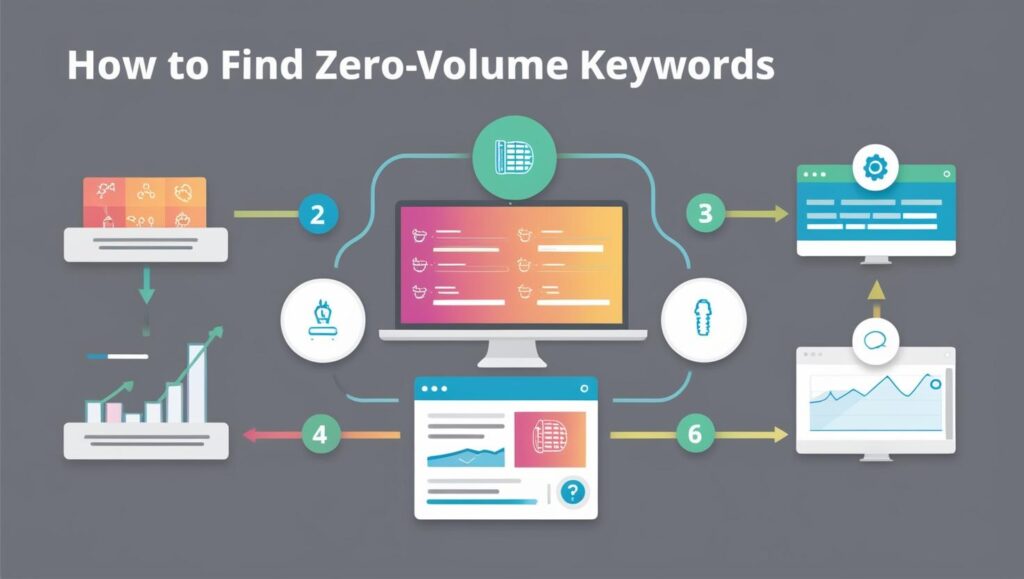
Finding these keywords involves a mix of creativity and resourcefulness. Here are some proven methods:
Use Google’s “People Also Ask” and Related Searches for Zero Volume Keywords
Start by entering a broad seed keyword in Google. Scroll down to the “People also ask” section and the bottom of the SERP to discover highly specific queries. These suggestions often contain the long-tail variations that aren’t prominently featured in traditional keyword tools.
Leverage Free Keyword Research Tools
Tools like AnswerThePublic, Ubersuggest, and Google Trends can help you uncover conversational queries and emerging trends. Even if these keywords show “0” volume, they represent genuine user questions and intent that you can target for niche traffic.
Reverse-Engineer Competitor Content
Examine competitor websites and blogs in your niche. Identify recurring phrases and specific questions they address. These insights can be transformed into zero volume keywords that fill gaps in your own content strategy.
Use the Alphabet Soup Method
Enter your seed keyword in Google along with a letter (for example, “best eco-friendly reusable shopping bags a…”). Google’s autocomplete suggestions can reveal multiple long-tail variations that are often overlooked by competitors.
How to Optimize for Zero Volume Keywords
To truly capitalize on these hidden opportunities, your content must be precisely optimized:
Create Highly Specific, Quality Content
Since zero volume keywords are very niche, your content should directly answer the unique queries they represent. For example, instead of writing a generic post on reusable shopping bags, create a detailed guide titled “How to Choose the Best Eco-Friendly Reusable Shopping Bags for Summer Markets.”
Use Structured Data and FAQ Sections
Incorporate FAQ sections and use schema markup to help search engines understand that your content directly addresses user questions. This increases the likelihood of being featured in rich snippets—even if the keyword volume is low.
Blend With Higher Volume Keywords
Integrate your zero volume keywords naturally with related higher volume terms to create a robust content cluster. For instance, combine “best eco-friendly reusable shopping bags for summer markets” with broader phrases like “best reusable shopping bags” and “eco-friendly shopping tips.”
Monitor and Refine
After publishing, use Google Search Console and other analytics tools to track impressions, clicks, and conversions. Adjust your content based on these insights to continuously improve your rankings.
Real-World Success: A Case Study
Consider a small eco-friendly products website that targeted a zero volume keyword: “best eco-friendly reusable shopping bags for summer markets.” Although traditional tools showed little to no search volume, the site published a detailed, optimized guide on the topic. Within a few months, the post began ranking on the first page of Google for that precise phrase. This targeted approach drove a steady stream of highly engaged traffic and resulted in a significant boost in inquiries and sales—all achieved without heavy competition from larger brands.
FAQs

What are zero volume keywords?
Zero volume keywords are highly specific long-tail phrases that often show little to no search volume in research tools, yet they capture precise user queries with minimal competition.
Why should you target zero volume keywords?
Targeting these keywords can help you rank quickly for niche queries, attract a highly relevant audience, and build authority without significant SEO investment.
How can you find zero volume keywords?
Use Google’s “People Also Ask” feature, free tools like AnswerThePublic and Ubersuggest, reverse-engineer competitor content, and try the Alphabet Soup Method to uncover these hidden keyword gems.
Conclusion
These keywords might seem insignificant at first glance, but they hold tremendous potential as hidden SEO goldmines. By targeting these niche, low competition keywords, you can attract a highly engaged audience, build your website’s authority, and generate quality traffic—even in competitive markets. Embrace the power of zero volume keywords, optimize your content for specificity, and watch your SEO performance soar.
Happy optimizing!
At Balistro, we specialize in helping businesses grow through effective digital marketing strategies. From Google Ads to Meta Ads, we deliver data-driven campaigns that maximize your ROI and drive real results. If you’re looking to boost your online presence, generate leads, or scale your e-commerce business, our expert team is here to help. Contact us today to learn more about how we can support your advertising needs!
Ready to Grow Your Business?
Book a free 30-minute strategy call with Balistro. We’ll audit your marketing and show you exactly where your biggest growth opportunities are.
Why SEO Remains the Highest-ROI Digital Marketing Channel
Search engine optimization consistently delivers the highest return on investment of any digital marketing channel, with studies showing an average ROI of 748% (Source: First Page Sage). Unlike paid advertising where traffic stops the moment you stop spending, SEO builds cumulative organic visibility that compounds over time.
For Indian businesses, where Google holds over 98% search market share, SEO is not optional — it’s foundational. With 53.3% of all website traffic coming from organic search (Source: BrightEdge), brands that neglect SEO are effectively invisible to the majority of their potential customers.
The evolution of Google’s algorithm in 2025-2026 has made E-E-A-T (Experience, Expertise, Authoritativeness, Trustworthiness) more important than ever. Brands that invest in high-quality content, strong backlink profiles, and technical SEO excellence are being rewarded with prominent organic positions, while those relying on outdated tactics are seeing declining rankings.
A Practical SEO Implementation Roadmap
Building sustainable organic visibility requires a multi-faceted approach. Here’s the SEO framework Balistro’s team implements for D2C and B2B clients:
- Technical SEO Foundation: Start with a comprehensive technical audit. Ensure clean site architecture with logical URL hierarchy, implement proper XML sitemaps, fix crawl errors, optimize robots.txt, and improve Core Web Vitals. Page speed should be under 2.5 seconds for LCP (Largest Contentful Paint).
- Keyword Strategy & Content Mapping: Conduct thorough keyword research targeting a mix of head terms (high volume), body terms (moderate competition), and long-tail keywords (high intent). Map keywords to specific pages and content types — service pages target commercial keywords while blog content targets informational queries.
- On-Page Optimization: Optimize title tags (under 60 characters, primary keyword included), meta descriptions (under 155 characters, compelling CTAs), header hierarchy (H1 → H2 → H3), and content quality. Include internal links to relevant service pages and related content. Aim for comprehensive content that thoroughly covers the topic.
- Content Creation & Freshness: Publish 2-4 high-quality articles per week targeting keyword clusters relevant to your services. Update existing content quarterly with fresh statistics, examples, and expanded sections. Content freshness is a ranking signal — regularly updated pages outperform stale content.
- Off-Page SEO & Link Building: Build authoritative backlinks through guest posting, digital PR, resource page link building, and brand mention reclamation. Focus on quality over quantity — one link from a high-authority domain is worth more than 50 links from low-quality sites.
- Local SEO (for service businesses): Optimize Google Business Profile with complete information, regular posts, and review management. Build local citations across relevant directories. Target location-specific keywords for service area pages.
SEO Mistakes That Tank Your Rankings
Based on auditing hundreds of websites, here are the most damaging SEO mistakes Balistro’s team encounters:
- Thin content that doesn’t satisfy search intent: Google’s Helpful Content Update specifically targets pages that exist solely for search engines rather than users. Every page should thoroughly answer the searcher’s question and provide genuine value beyond what competitors offer.
- Ignoring technical SEO: Beautiful content on a slow, poorly structured site won’t rank. Core Web Vitals, mobile responsiveness, crawlability, and site architecture are foundational — fix technical issues before investing heavily in content creation.
- Keyword stuffing and over-optimization: Cramming keywords unnaturally into content, headers, and meta tags signals manipulation to Google. Write for humans first, then optimize naturally. Keyword density should be 1-2% at most, integrated seamlessly into well-written content.
- Neglecting internal linking: Internal links distribute page authority and help search engines understand site structure. Every new piece of content should link to 3-5 relevant existing pages, and older content should be updated to link to new content.
- Not tracking and measuring results: Without proper analytics, you can’t know what’s working. Set up Google Search Console, GA4, and rank tracking tools. Monitor organic traffic, keyword positions, click-through rates, and conversion metrics monthly.
Frequently Asked Questions
How long does it take to rank on the first page of Google?
Most new pages take 3-6 months to reach page one for moderately competitive keywords. Highly competitive terms may take 6-12 months or longer. Quick wins through technical fixes, content optimization, and internal linking can show improvement within weeks, but sustainable first-page rankings require consistent effort over months.
Is SEO still worth it with AI Overviews and featured snippets?
Yes, SEO is more important than ever. While AI Overviews change how results appear, they still source information from well-optimized websites. Brands with strong E-E-A-T signals and well-structured content are more likely to be cited in AI-generated responses. Optimizing for both traditional search and AI answer engines (AEO/GEO) is the winning strategy for 2026.
What’s the difference between SEO and SEM?
SEO (Search Engine Optimization) focuses on earning organic search visibility through content quality, technical optimization, and backlinks. SEM (Search Engine Marketing) includes both SEO and paid search advertising (PPC). While SEM provides immediate visibility through ads, SEO builds sustainable long-term traffic. Most successful brands invest in both channels simultaneously.
Ready to Grow Your Business?
At Balistro Consultancy, we help D2C and B2B brands achieve measurable marketing results through data-driven strategies. Whether you need Google Ads management, Facebook advertising, SEO services, or email marketing, our team of certified specialists is ready to help you grow.
Book a free consultation call to discuss your marketing goals and discover how Balistro can drive real results for your brand.