
Why Full-Funnel Marketing Automation Is No Longer Optional
Most brands in 2026 are still running fragmented marketing — paid acquisition here, a few email campaigns there, occasional social posts, and a retargeting campaign running in the background. This fragmented approach wastes budget, creates inconsistent customer experiences, and makes it nearly impossible to optimise for long-term profitability.
A full-funnel marketing automation system treats your entire customer journey as a connected, data-driven engine. Every touchpoint is intentional, every transition between stages is automated, and every decision is informed by performance data.
At Balistro Consultancy, we build full-funnel automation systems for D2C and B2B brands. Here is the step-by-step framework we use.
The Four Stages of a Full-Funnel Automation System
Stage 1: Awareness — Paid Ads That Feed the Funnel
The top of the funnel is where strangers become aware of your brand. Paid advertising is the most scalable way to drive this awareness, but it needs to be architected to feed your automation systems — not just drive isolated clicks.
Best practices for automation-ready awareness campaigns:
- Every ad should drive to a landing page with a clear lead capture mechanism (email signup, quiz, free resource download)
- Use UTM parameters on all ads so you can track which awareness campaigns produce the highest-quality leads downstream
- Set up pixel-based audience building from day one — website visitors, video viewers, and landing page visitors become your retargeting pools
- Integrate your ad platforms with your CRM so new leads automatically trigger the right nurture sequences
Stage 2: Consideration — Retargeting and Content Automation
Prospects who have entered your funnel but have not converted yet are in the consideration stage. Your job here is to remove objections, build trust, and provide the information they need to make a decision.
Automated consideration-stage tactics:
- Retargeting sequences: Set up Meta and Google retargeting campaigns that serve different messages to different audience segments based on their on-site behaviour
- Email nurture sequences: Automated email flows triggered by specific actions (downloaded a guide, visited a pricing page, started a free trial) that guide prospects toward conversion
- Content personalisation: Serve different landing page variations to different traffic segments using tools like Unbounce or Google Optimize
- Lead scoring automation: Assign points to prospect actions (visited pricing page = 10 points, opened 3 emails = 15 points) so your sales team focuses on the hottest leads
Stage 3: Conversion — Email Sequences and Landing Pages That Close
The conversion stage is where you turn interested prospects into paying customers. Automation plays a critical role in making this process consistent and scalable:
- High-converting landing pages: Every offer in your automation system should have a dedicated landing page optimised for conversion, not your generic homepage
- Abandoned cart sequences: For D2C brands, automated abandoned cart emails and WhatsApp messages recover 15-25% of otherwise lost revenue
- Time-sensitive offer flows: Automated sequences that create genuine urgency (limited stock, offer expiry) without being manipulative
- Social proof automation: Automatically display recent purchases, review highlights, and trust badges based on real-time data
- Demo booking automation: For B2B brands, automated calendar booking with pre-qualification questions and confirmation sequences
Stage 4: Retention — Loyalty Flows That Maximise LTV
For most brands, acquiring a new customer costs 5-7x more than retaining an existing one. Your retention automation system is where long-term profitability is built:
- Post-purchase onboarding flows: Welcome new customers, guide them through getting maximum value from their purchase, and set the stage for a long-term relationship
- Replenishment reminders: For consumable products, automatically remind customers to reorder before they run out
- Loyalty and rewards automation: Track points, trigger reward emails, and personalise offers based on purchase history
- Win-back campaigns: Automatically identify customers who have not purchased in 60-90 days and trigger a re-engagement sequence
- Referral program automation: Prompt happy customers to refer friends at the peak moment of satisfaction — right after a great product experience
The Technology Stack for Full-Funnel Automation
Building a full-funnel system requires connecting the right tools. A typical stack for a D2C or B2B brand includes:
- Ad platforms: Meta Ads and Google Ads for top-of-funnel acquisition and retargeting
- CRM: HubSpot, Salesforce, or a lighter tool like Klaviyo for D2C — the CRM is the backbone of your automation
- Email and SMS platform: Klaviyo for D2C, HubSpot or ActiveCampaign for B2B
- Analytics: GA4 for website data, connected to a custom dashboard for cross-channel performance visibility
- Landing page builder: Unbounce, Webflow, or Elementor for conversion-optimised pages
Custom Automation Tools Balistro Builds
Beyond off-the-shelf tools, Balistro builds custom automation systems for brands and agencies that need capabilities beyond what standard platforms offer. This includes custom attribution models, automated reporting dashboards, AI-powered audience segmentation tools, and multi-channel orchestration systems that connect ad platforms, CRM, and email in ways standard integrations cannot.
Measuring Full-Funnel Performance
A full-funnel system requires full-funnel measurement. The metrics to track at each stage are awareness (cost per reach, CPM, brand search volume lift), consideration (cost per lead, lead quality score, email open and click rates), conversion (conversion rate, CAC, ROAS), and retention (repeat purchase rate, LTV, NPS, churn rate).
Balistro builds integrated dashboards that show all four stages in a single view, enabling weekly optimisation decisions backed by complete data. Learn more about our data analytics and reporting services.
How Balistro Builds Full-Funnel Systems
Balistro is a full-funnel performance marketing agency. We design, build, and manage complete marketing automation systems for D2C and B2B brands that are ready to grow beyond campaign-by-campaign thinking. Our team handles strategy, tech stack setup, campaign management, content, and analytics in an integrated way.
We also build custom marketing technology for agencies wanting to offer full-funnel automation to their clients as a managed service. Explore our digital marketing services to learn more.

Ready to Build Your Full-Funnel System?
If your brand is ready to move from fragmented campaigns to a connected, automated marketing engine, Balistro can design and build the entire system for you.
Book a free strategy call with Balistro and we will show you exactly what your full-funnel automation system should look like.
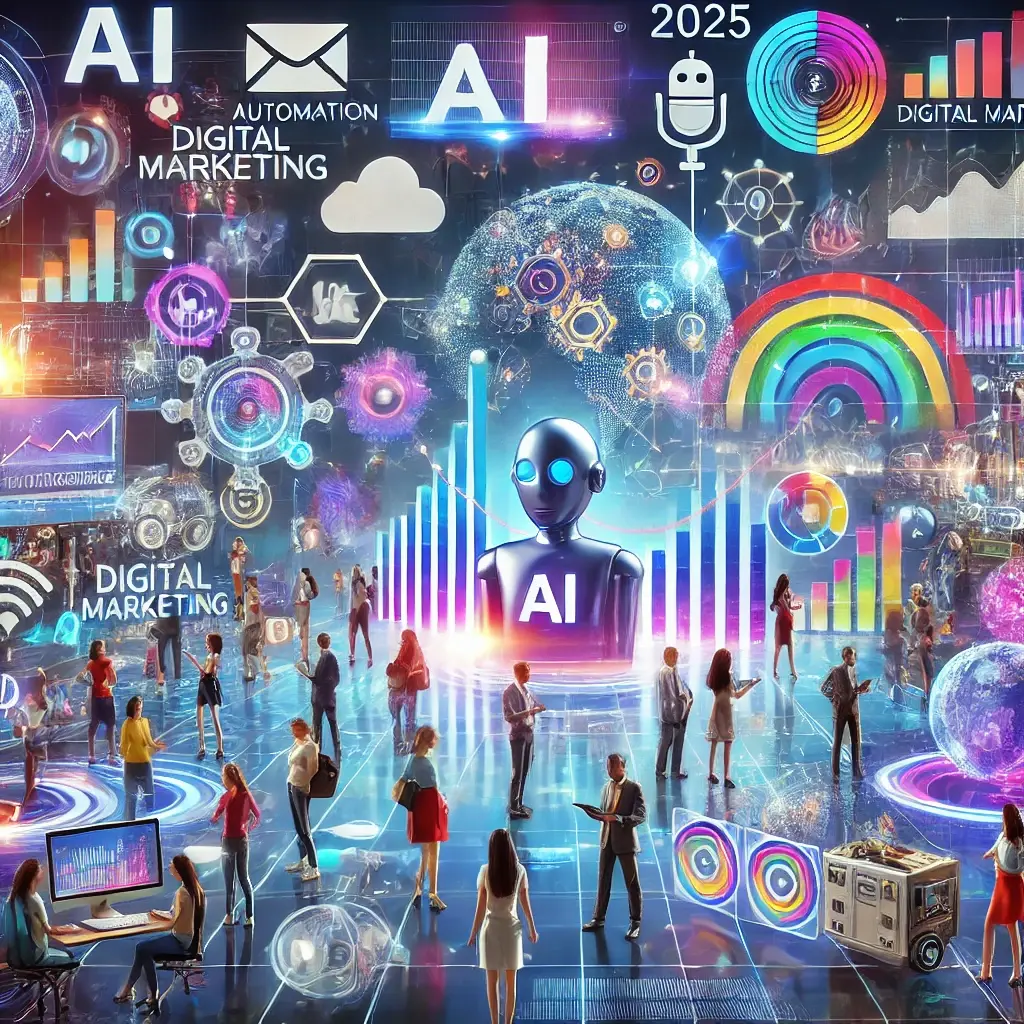
Why AI and Marketing Automation Are Reshaping the Industry
Artificial intelligence and marketing automation have moved from experimental technology to essential business infrastructure. In 2026, brands using AI-powered marketing tools report 30-50% improvements in campaign efficiency, while marketing automation drives 14.5% increase in sales productivity and 12.2% reduction in marketing overhead (Source: Nucleus Research).
For Indian businesses competing in an increasingly digital marketplace, AI adoption is no longer optional — it’s a competitive necessity. From AI-powered bidding algorithms in Google and Meta Ads to automated email workflows and predictive analytics, the brands that leverage these technologies effectively are outpacing those that rely solely on manual processes.
The evolution of large language models like Claude and GPT has opened entirely new possibilities for content creation, customer service automation, and data analysis. Marketing teams that integrate these tools into their workflows are producing more content, responding faster to market changes, and making better data-driven decisions — all with leaner teams.
Implementing AI and Automation in Your Marketing Stack
- Audit Your Current Workflow: Identify repetitive, time-consuming tasks that could benefit from automation — report generation, bid management, email scheduling, social media posting, and basic customer inquiries. Prioritize tasks with the highest time-savings and lowest implementation risk.
- Start with Platform-Native AI: Before investing in third-party tools, leverage AI features built into your existing platforms — Google’s Smart Bidding, Meta’s Advantage+ campaigns, Klaviyo’s predictive analytics, and HubSpot’s AI content assistant. These require no additional investment and provide immediate value.
- Build Automated Workflows: Set up marketing automation workflows for common scenarios: lead nurturing sequences, abandoned cart recovery, post-purchase follow-ups, review requests, and re-engagement campaigns. Map out the full customer journey and automate touchpoints that don’t require human judgment.
- Integrate AI Content Tools: Use AI assistants for content creation acceleration — generating first drafts, brainstorming headlines, creating ad copy variations, and repurposing content across formats. Always review and refine AI-generated content for accuracy, brand voice, and uniqueness.
- Set Up Custom Automations: For more advanced needs, build custom automation tools that connect your marketing platforms. Use APIs to sync data between your CRM, ad platforms, and analytics tools. Automate reporting dashboards that update in real-time without manual data pulling.
AI Marketing Mistakes to Avoid
- Automating without strategy: Automation amplifies both good and bad strategies. Before automating any marketing process, ensure the underlying strategy is sound. Automating a poorly designed email sequence just sends bad emails faster.
- Over-relying on AI for content: AI-generated content without human oversight risks brand voice inconsistency, factual errors, and generic messaging. Use AI to accelerate content creation, but always have human editors review for accuracy, quality, and brand alignment.
- Ignoring the human element: Not every customer interaction should be automated. Complex inquiries, complaint resolution, and high-value relationship building require human touch. Use automation for routine tasks and free up your team for high-impact human interactions.
- Not measuring automation ROI: Track the business impact of every automation you implement — time saved, revenue generated, costs reduced. Regularly audit automated workflows to ensure they’re still performing well and haven’t become stale or irrelevant.
- Failing to maintain and update: Marketing automation requires ongoing maintenance. Algorithms change, platforms update, and market conditions shift. Review and optimize automated workflows quarterly to ensure they remain effective and aligned with current best practices.
Frequently Asked Questions
Will AI replace marketing agencies?
AI won’t replace marketing agencies, but agencies that use AI will replace those that don’t. AI handles repetitive tasks like bid optimization, basic content generation, and data analysis faster and at scale. However, strategic thinking, creative direction, brand building, and complex problem-solving still require human expertise. The most effective approach combines AI efficiency with human creativity and judgment.
What AI tools are most useful for digital marketing?
Essential AI marketing tools in 2026 include: Claude and GPT for content creation and analysis, Google’s AI-powered Smart Bidding for ad optimization, Jasper or Copy.ai for ad copywriting, Midjourney for creative assets, and platform-native AI features in Klaviyo, HubSpot, and Salesforce for automation. The best tool depends on your specific needs and existing tech stack.

How do I get started with marketing automation?
Start small with high-impact automations: set up a welcome email series for new subscribers, configure abandoned cart recovery emails, and enable Google Ads Smart Bidding. These three automations alone can significantly improve marketing performance with minimal technical complexity. Expand gradually as you see results and build confidence in the technology.
Ready to Grow Your Business?
At Balistro Consultancy, we help D2C and B2B brands achieve measurable marketing results through data-driven strategies. Whether you need Google Ads management, Facebook advertising, SEO services, or email marketing, our team of certified specialists is ready to help you grow.
Book a free consultation call to discuss your marketing goals and discover how Balistro can drive real results for your brand.
The AI Marketing Technology Stack: Building for the Future
The AI marketing technology landscape is evolving rapidly, with new tools and capabilities emerging monthly. Building an effective AI marketing stack requires strategic thinking about which tools provide genuine value versus which are hype-driven. The most impactful AI marketing tools in 2026 fall into three categories: optimization, creation, and analysis.
AI-powered optimization tools — including Google’s Smart Bidding, Meta’s Advantage+, and third-party bid management platforms — have proven their value through years of iteration. These tools leverage machine learning on massive datasets to make bidding and targeting decisions that would be impossible for human marketers to replicate at scale.
Generative AI for content creation has matured significantly, with models like Claude and GPT enabling marketing teams to produce content at unprecedented speed. The key to effective AI content creation is using these tools as accelerators rather than replacements — generating first drafts and variations that human experts then refine for accuracy, brand voice, and strategic alignment.
Custom automation tools built specifically for marketing workflows are becoming increasingly common as agencies and in-house teams seek efficiency gains. From automated reporting pipelines that pull data from multiple platforms into unified dashboards, to creative testing frameworks that systematically rotate and evaluate ad variations, custom tools provide competitive advantages that off-the-shelf solutions cannot match.
The ethical considerations of AI in marketing — including transparency about AI-generated content, data privacy in AI training, and the impact of automation on marketing employment — are important factors that responsible brands must address. Building AI marketing practices that are effective, transparent, and ethical creates long-term brand trust and regulatory resilience.