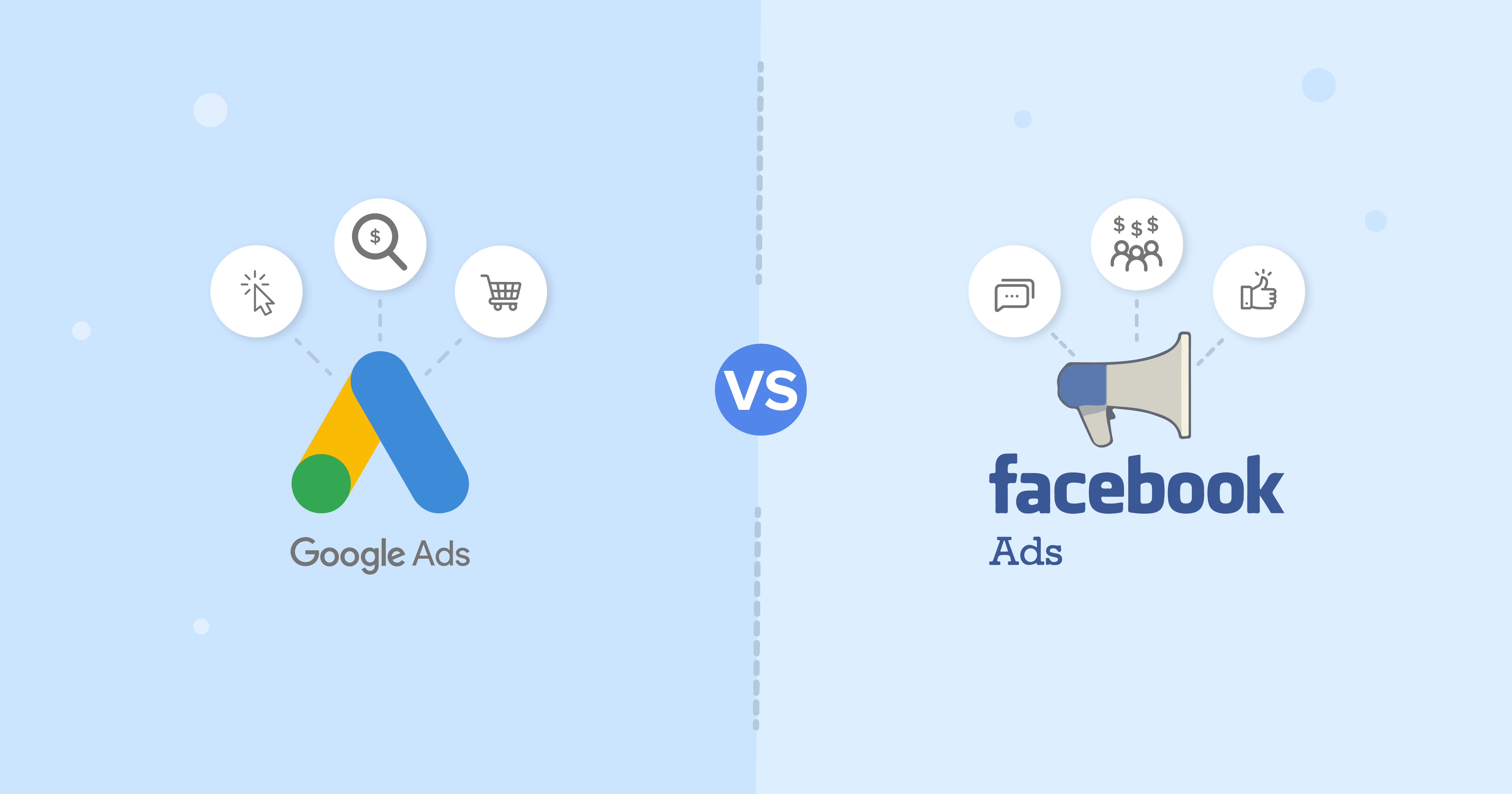
In the world of performance marketing, choosing the right advertising platform is crucial for driving results. Google Ads and Meta Ads (formerly known as Facebook Ads) are two of the most powerful and popular digital advertising channels. While both platforms have their advantages, the question of which one is better depends on a variety of factors like business goals, audience, budget, and industry. This blog will explore the strengths of each platform to help you determine which is best suited for your needs. 1. Audience Reach and Targeting Capabilities – Google Ads: Google Ads operates on the largest search engine in the world, allowing you to reach users when they are actively searching for specific information, products, or services. It uses keywords to target search intent, making it highly effective for capturing leads that are closer to making a purchase decision. – Best for: Reaching users with high purchase intent, targeting specific keywords, and driving traffic through search results. – Meta Ads: Meta Ads leverage Facebook and Instagram’s vast social media user base, offering powerful demographic, behavioral, and interest-based targeting. With Meta Ads, you can engage users based on their social behavior, interests, and interactions, making it an excellent platform for brand awareness and audience discovery. – Best for: Broadening reach, building brand awareness, and engaging with users through dynamic, visual content. 2. Ad Formats and Creativity Google Ads: Google Ads provide multiple formats such as search ads, display ads, shopping ads, and video ads (on YouTube). While search ads are text-based, display and video ads offer visual storytelling opportunities. Strength: Ideal for direct-response campaigns, especially for businesses looking to capture search-driven leads or conversions. Meta Ads: Meta excels at offering visually engaging ad formats, including carousel ads, story ads, video ads, and dynamic product ads. The immersive nature of Instagram and Facebook allows for creative expression, interactive elements, and video-heavy content, making it easier for brands to connect emotionally with their audiences. Strength: Perfect for creative storytelling, product showcases, and brand building through visual engagement. 3. Cost and Return on Investment (ROI) – Google Ads: Google Ads can be expensive, especially for competitive keywords in high-demand industries. However, it often delivers high-intent leads that are further down the sales funnel, which can result in a higher ROI for certain businesses. The cost-per-click (CPC) varies based on keyword competition, location, and bidding strategy. – ROI Potential: Higher for businesses in B2B, service-based, or niche industries with strong search intent. – Meta Ads: Meta Ads tend to have lower CPCs compared to Google Ads, making them more cost-effective for broad audience targeting. Meta Ads are particularly advantageous for businesses looking to build brand awareness or generate interest in new products. However, converting cold audiences may take longer. – ROI Potential: Higher for consumer brands, e-commerce, and businesses focused on building customer relationships and retargeting. 4. Campaign Objectives Google Ads: Google Ads is designed to capture demand. It’s excellent for driving immediate conversions, website traffic, or lead generation from users actively searching for specific products or services. Best for: Lead generation, direct sales, service inquiries, and e-commerce purchases. Meta Ads: Meta Ads excel in creating demand. If you are launching a new product or want to grow brand awareness, Meta’s powerful targeting and creative ad formats can help you connect with new audiences. It’s also effective for driving engagement, nurturing potential customers, and retargeting users who have interacted with your brand. Best for: Brand awareness, audience engagement, customer loyalty, and social proof. 5. Data, Tracking, and Reporting – Google Ads: Google offers robust tracking and reporting tools through Google Analytics and Google Ads Manager. It allows advertisers to track metrics like conversions, bounce rates, and time on site, helping businesses refine their ad strategy based on in-depth data. – Strength: Advanced analytics and conversion tracking, especially for search campaigns. – Meta Ads: Meta’s data reporting has been impacted by recent changes like Apple’s iOS 14 update, which restricts certain types of data tracking. However, Meta still provides a comprehensive set of metrics through Facebook Ads Manager, allowing advertisers to track engagement, conversion events, and audience insights. – Strength: Strong for tracking social interactions, audience demographics, and ad engagement, but limited by privacy policies. Which is Better for Your Business? – Choose Google Ads if: – You are targeting high-intent customers searching for specific solutions. – You need immediate conversions, such as direct sales or lead generation. – You have a higher budget for competitive keywords and a longer sales cycle. Ultimately, the better platform depends on your business goals, audience, and industry. Here’s a quick breakdown: – Choose Meta Ads if: – You are looking to build awareness, tell a brand story, or engage a wide audience. – You want to leverage highly creative ad formats for brand engagement. – Your focus is on generating demand, nurturing leads, and retargeting warm audiences. TL;DR Both Google Ads and Meta Ads offer distinct advantages. Google Ads are unparalleled for intent-driven advertising, while Meta Ads offer creative and broad-reaching campaigns. A hybrid approach, leveraging both platforms, often yields the best results for businesses seeking a mix of direct response and long-term brand growth. Consider your audience, objectives, and budget to choose the right platform—or better yet, experiment with both to see which delivers the best return for your business. Ready to Grow Your Business? Book a free 30-minute strategy call with Balistro. We’ll audit your marketing and show you exactly where your biggest growth opportunities are. Book a Free Strategy Call →
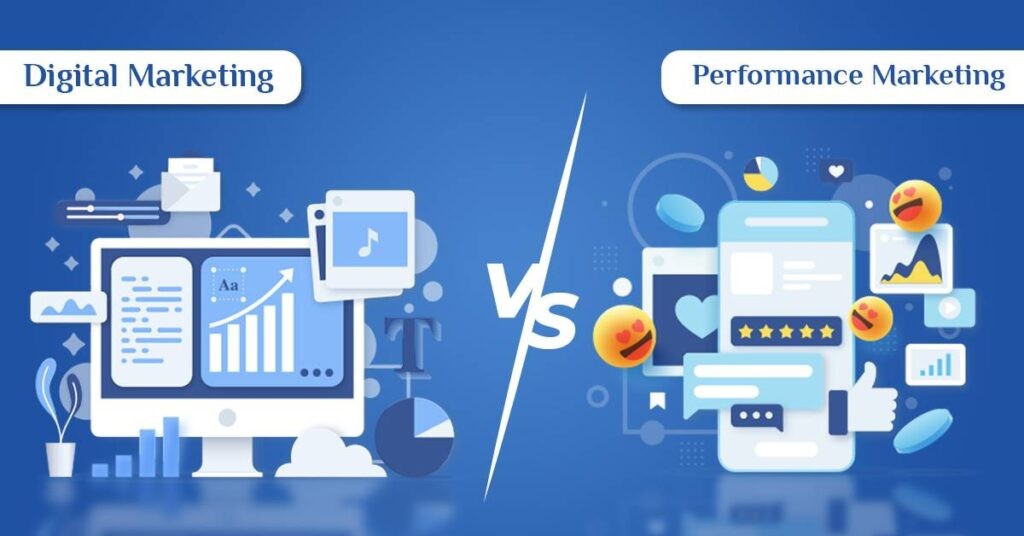
Digital Marketing Vs Performance Marketing
The main difference between digital marketing and performance marketing is in their marketing approach. Performance marketing is a result-centric digital marketing strategy. Digital marketing is a huge term that promotes the brand, sells the product, and connects potential customers using various channels. Digital marketing has various payment models, strategies, and channels. Performance marketing is the optimization of these channels and strategies. Performance marketing has short-term goals than digital marketing. It is easy to measure the metrics of performance marketing. Performance marketing has the fastest and most visible result. Digital marketing takes time to produce a result when compared to performance marketing. Performance marketing only focuses on lead generation and conversion. Performance marketing channels are banner(Display) ads, native advertising, content marketing, social media, and search engine marketing (SEM). What are Digital Marketing And Performance Marketing? Digital marketing is online marketing to connect potential customers using the internet. Digital marketing is used to increase the digital presence of a business. That is to drive traffic to a website using digital tools. Some of the digital tools are social media, email marketing, search engine marketing, display advertising, video marketing, mobile marketing, and pay-per-click advertising. Digital marketing focus on lead generation, conversion, brand awareness, and reach. Performance marketing is a specific form of digital media advertising. Performance marketing is a business based on clients’ actions like clicks, sales, and leads. In performance marketing, marketers need to set the proper budget and impression for the campaigns and track the campaign to analyze the result. In short, performance marketing is performance-based marketing. Performance marketing using paid media such as Google AdWords, Facebook ads, LinkedIn ads, and banner ads. Performance marketing only focuses on lead generation and conversion. Performance marketing channels are banner(Display) ads, native advertising, content marketing, social media, and search engine marketing (SEM).Instead of paying for an advertisement in digital marketing, advertisers can only pay for the performance of an ad in performance marketing. Performance is measured by the number of leads, impressions, likes, and shares. Digital marketing creates brand awareness and interaction with the target audience. Advertisers are not paying for the actual conversion in digital marketing. While in performance marketing, advertisers are paying for the leads and for converting them to potential customers. It is important to understand digital marketing vs performance marketing. Metrics to Measure Performance Marketing Cost Per Mille (CPM): It is the cost of showing every 1000 times digital ad to viewers. Marketers focus less on this metric.Cost Per Click (CPC): It is the cost of clicking the ad every time by the viewer.Cost Per Action (CPA): It measures the performance of a campaign by acting by the target audience like downloading, subscribing, signing up, etc.Life Time Value (LTV): It is the lifetime value of each customer. Expected spending of each customer. Metrics to Measure Digital Marketing Bounce Rate: It is the number of visitors to a site and left back without performing any action.Page Views: It is the total number of pages viewed.Conversion Rate: It is the total number of conversions from a specific website.Click-Through Rate (CTR): It is the ratio of the total number of clicks to the total number of viewers. Types of Performance Marketing Search Performance MarketingIt is the process of paying for the search ad shown on the search engine result page. It drives traffic to a website. It works by finding the target audience with the right keyword. Social performance marketingIt is the paid ads and organic posts on social media and also focuses on high-quality content. Content should be engaging and interactive for customers. Email Performance MarketingIt uses the email marketing strategy to grow its business. It measures the opening rate of emails through quality content and targets the right audience. Publisher Performance MarketingIt is the paid publisher ad showing on the websites and apps which the advertiser does not own. It also drives traffic to a website. Affiliate Performance MarketingIt aims to get customers to buy products and services from the advertiser for a commission. It can be done through a partnership with affiliate publishers and influencers. Types of Digital Marketing Content MarketingIt is the creation of high-quality and useful content. Different types of content are blogs, social media posts, videos, webinars, infographics, templates, datasheets, and reports. Publish useful content for the audience. Search Engine MarketingIt is the process of getting your website at the top of the search engine result page. Know the keyword that the audience searches for to get a better result. Paid ads and organic comes under this marketing. Social Media MarketingSocial media allows interaction and engagement with customers. You can make paid ads and can also post content on social media to reach the audience. Select the appropriate channel for your product or service. There are various channels like Facebook, Instagram, Twitter, LinkedIn, Pinterest, YouTube, and Snapchat. Paid AdvertisingPaid advertising has two different payment models. PPC (Pay Per Click): You can buy clicks on your ad through a keyword bidding auction. CPM (Cost Per Mile): It benefits more when you use the short tail keyword. It is the cost for every 1000 impressions. TL;DR Digital marketing and performance marketing differ in their approaches. Digital marketing promotes brands, sells products, and engages potential customers across channels, while performance marketing optimizes channels for specific goals and measurable outcomes. Digital marketing focuses on long-term results and brand awareness, while performance marketing targets immediate, tangible results. Digital marketing includes diverse strategies and payment models, while performance marketing centers on lead generation and conversions. Both forms are vital for business success and require effective utilization. Join the best digital marketing course in Kerala and explore more about performance marketing and digital marketing. Ready to Grow Your Business? Book a free 30-minute strategy call with Balistro. We’ll audit your marketing and show you exactly where your biggest growth opportunities are. Book a Free Strategy Call →

What are the steps to improve the On-Page SEO of my website?
On-page SEO refers to the process of optimizing individual web pages in order to rank higher and earn more relevant traffic in search engines.

Beginners guide to email marketing
Email marketing is a cost-effective and powerful way for businesses to reach and engage with their customers.

How to build an email list for email marketing?
An email list is a collection of email addresses that you can use to send marketing messages to. Building an email list is an important step in starting an email marketing campaign.

How to do metaverse marketing?
Metaverse marketing refers to marketing efforts and strategies that take place within virtual reality environments, such as video games or virtual worlds. This can include advertising, brand activations, and other forms of marketing within these digital spaces.

What is green marketing and how to do it?
Green marketing, also known as sustainable marketing or eco-friendly marketing, refers to the marketing of products or services that are environmentally friendly or sustainable.
The Bold New Face of Marketing: Top 2024 Trends in AI, Video, and Sustainability
It’s difficult to predict exactly what marketing trends will be popular in 2023, as the field is constantly evolving and new technologies and techniques are being developed.

Skills to learn to earn more in digital marketing?
There are many skills that can be helpful for professionals in the field of digital marketing, and the specific skills that will be most valuable will depend on your specific job role and the needs of your organization.

Supercharge Your Marketing Strategy with Data Analytics for Better ROI
Data analytics can be a powerful tool for improving marketing strategies by providing insights into the effectiveness of marketing campaigns and helping to identify areas for improvement.